
Written by Verified Builders’ design-build team | Reviewed for design, material selection, and remodel planning | Updated March 2026
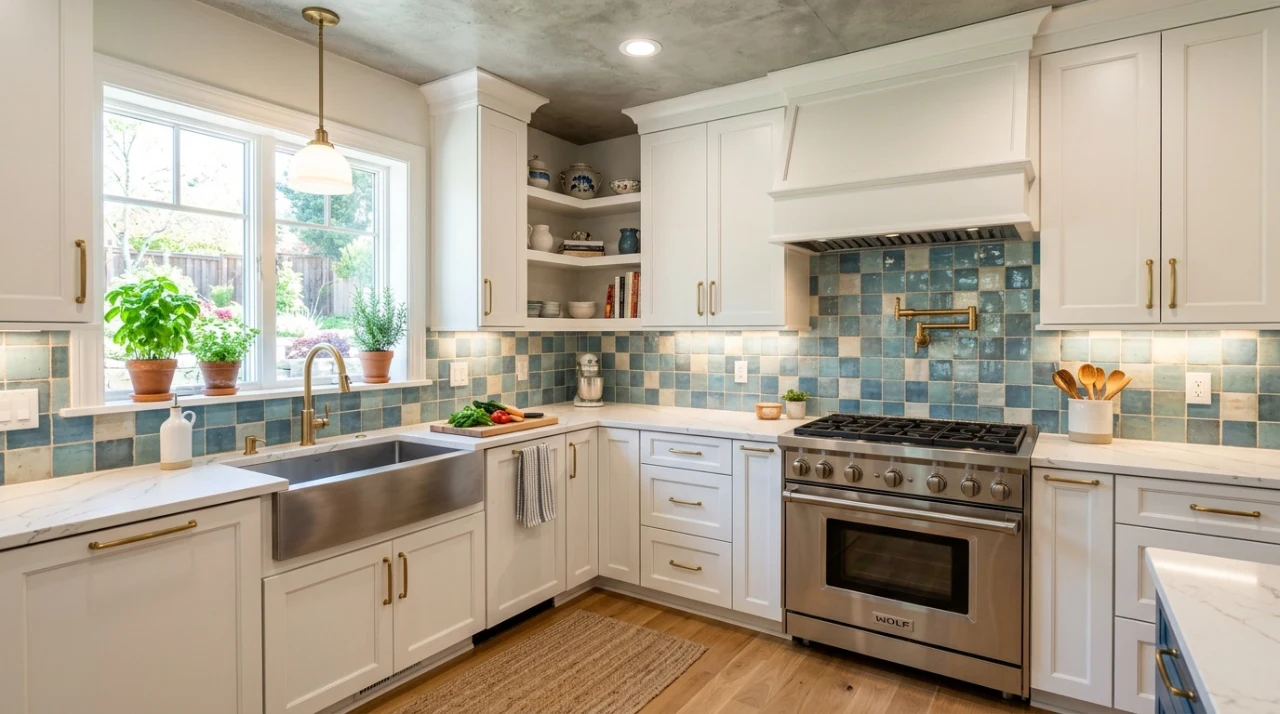
A kitchen backsplash protects the walls, ties together cabinets and countertops, and can dramatically transform a new kitchen.
For anyone planning kitchen remodeling in Denver, the right backsplash tile should not be a last-minute decision.
It should be part of the remodel process so the final product feels polished, practical, and aligned with your personal style.
At Verified Builders, our design-build kitchen remodeling team treats every kitchen renovation as an entire project.
The backsplash, cabinet design, surfaces, fixtures, lighting, and construction details are planned together.
Across the Denver Metro Area, that approach helps create functional spaces with better flow, clearer communication, and realistic budgets.
Quick Answer: How to Choose the Right Kitchen Backsplash
- Start with countertops, cabinets, and maintenance needs before choosing tile.
- Choose a backsplash material that fits your cleaning habits and maintenance tolerance.
- Use larger tile for a calmer look and mosaics more selectively as focal points.
- Match undertones and finishes before trying to match colors exactly.
- Decide on backsplash height early so it works with cabinets, windows, and the hood.
- Review samples in your actual kitchen before making a final decision.
Start with How Your New Kitchen Will Be Used
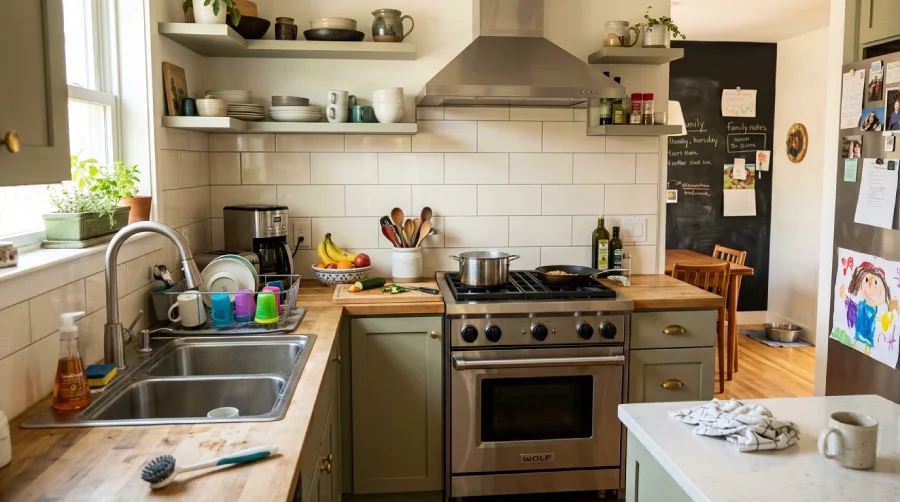
Before comparing materials, look at how the kitchen space works in daily life.
A busy family that cooks every day needs a functional kitchen with surfaces that clean easily.
A lower-use space may leave more freedom for texture, decorative style, and layered patterns.
The area behind the stove and sink works hardest, so durability matters.
Choosing durable materials such as porcelain, ceramic, or natural stone protects walls from moisture, stains, and heavy use.
For everyday kitchen life, think beyond the sample board and choose materials equipped for maintenance, sealing, and cleanup.
Let Your Kitchen Design and Countertops Guide the Decision
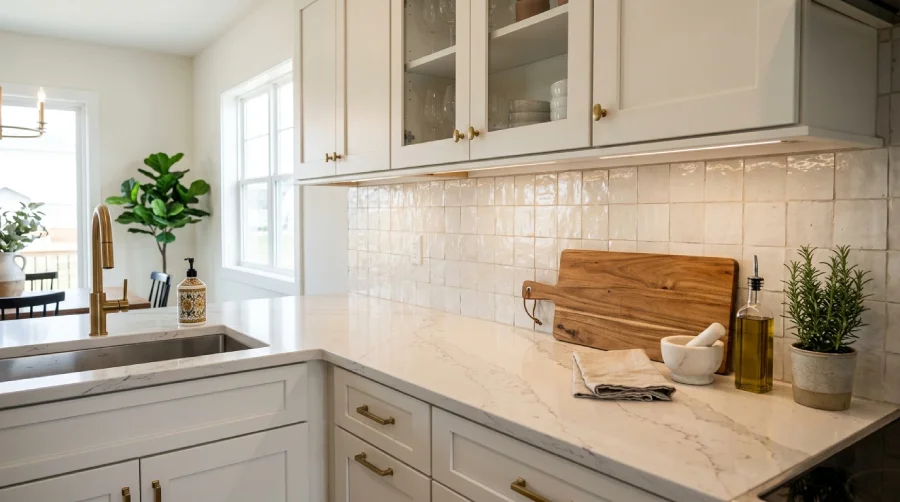
In most kitchen remodeling projects, countertops are one of the largest visual surfaces, so they should guide the backsplash decision.
If the counters have dramatic veining or a bold pattern, a quieter backsplash tile usually creates a calmer contrast.
If the countertops are subtle, the backsplash can add more movement and personality.
A kitchen backsplash should act as a visual bridge between cabinets and countertops.
That is one of the simplest rules in kitchen design.
The material does not need to match exactly, but it should work with the color scheme.
Coordinate Your Backsplash with Cabinets, Appliances, and Mixed Metals
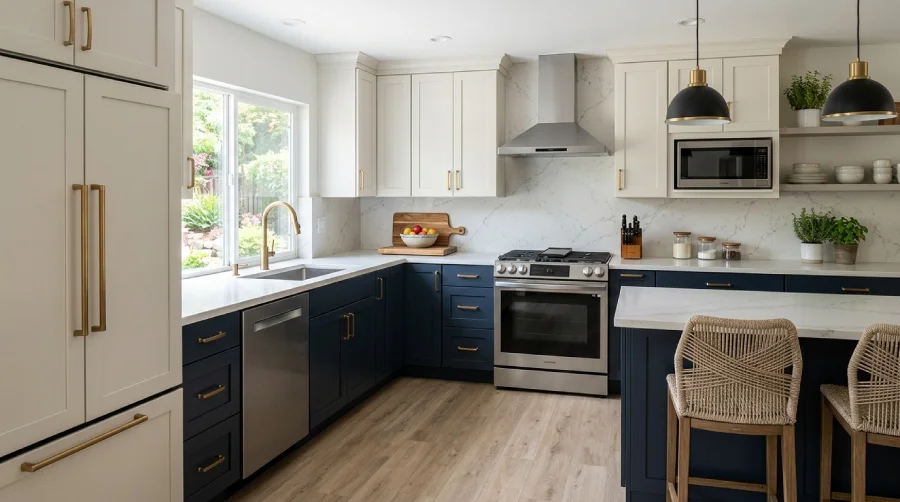
Backsplash choices should always be reviewed next to your cabinets, countertops, flooring, and fixtures.
White tile can look very different beside painted white cabinets than it does next to warm oak cabinets or painted green cabinets.
Small shifts in undertone can change the overall vision for the home.
Many Denver clients want a practical yet luxurious kitchen renovation with painted finishes, wood cabinets, mixed metals, and quality products.
You can see that balance in the Westminster kitchen transformation, where the material palette supports the room instead of competing with it.
Compare Backsplash Materials and Product Options
The best material depends on your budget, maintenance goals, style, and kitchen use.
Informed decisions start with understanding the possibilities.
Ceramic and Porcelain Tile
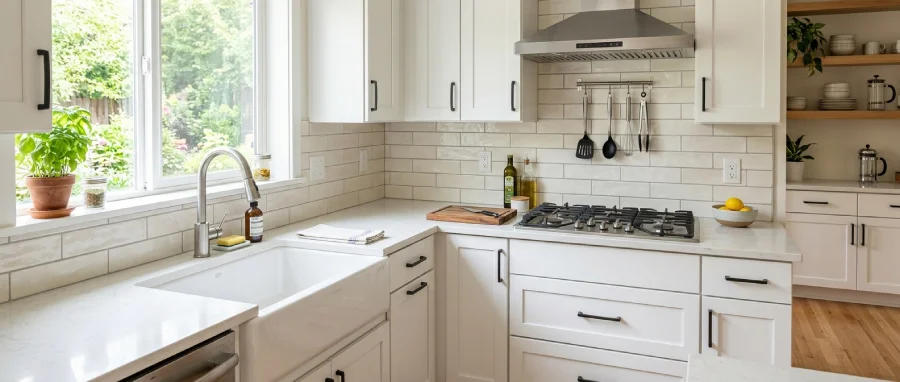
Ceramic and porcelain tile remain the most common backsplash tile options because they balance quality, functionality, and budget.
Ceramic tile is affordable and versatile, while porcelain tile is denser and more durable.
Natural Stone, Marble, and Granite
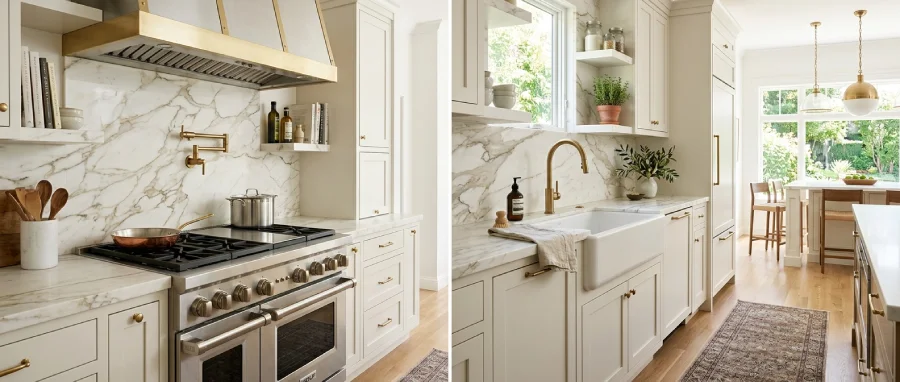
Stone surfaces such as marble and granite bring depth and luxury, but they also come with a higher price point and more maintenance.
Proper sealing matters because walls near a stove or sink see heat and moisture.
Glass Tile
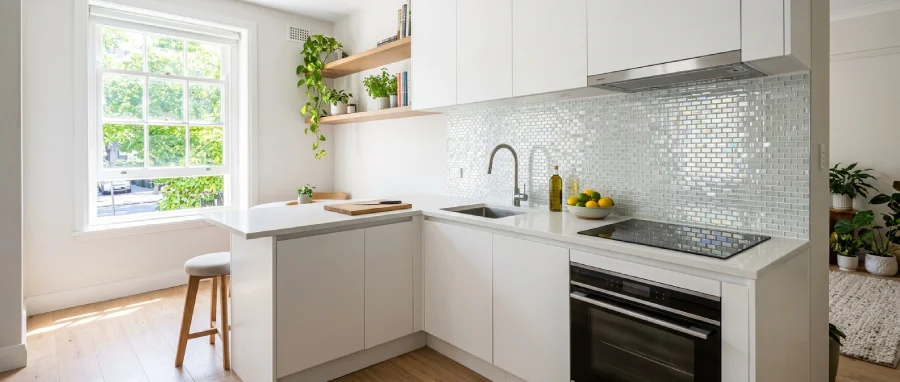
Glass tile can make a compact kitchen space feel larger because it reflects light.
It is a strong fit for a contemporary room, but it requires more vigilant cleaning to stay sparkling.
If your family cooks constantly, make sure the look fits your tolerance for splashes and smudges.
Metal Details and Slab Options
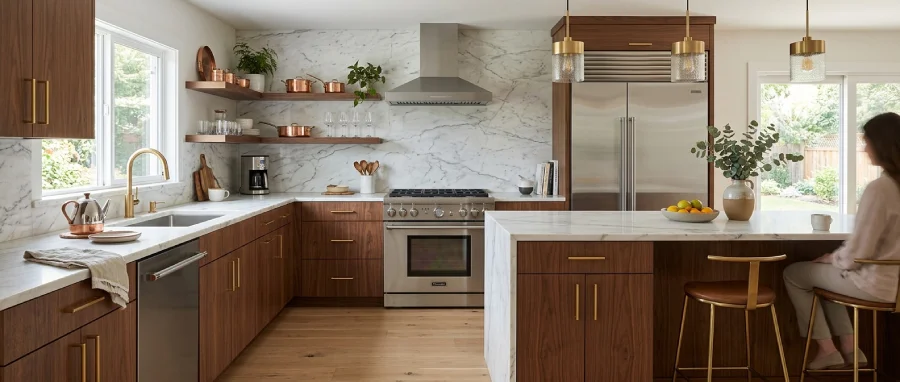
Metal finishes can add an urban edge to a kitchen, especially in a contemporary layout.
Stainless steel is the most practical, while brass and copper create warmth and character.
A slab backsplash is one of the cleanest-looking options because it runs the countertop material up the walls with fewer grout joints.
This choice often appears in a full renovation when the team wants one complete composition.
Choose the Right Tile Size, Shape, and Layout for Your Kitchen Design
The same tile can feel classic, modern, or custom depending on the arrangement.
A thoughtful layout promotes visual harmony while allowing each design element its moment.
Subway Tile is the Classic Choice for a Dream Kitchen
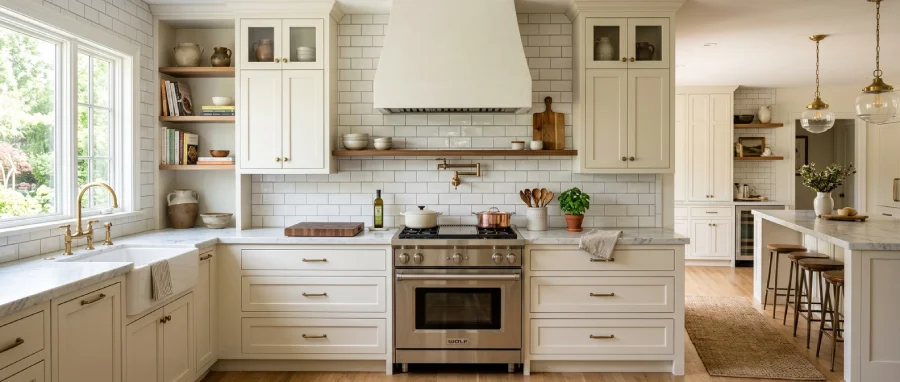
Subway tile stays relevant because it works in almost every style, from traditional to current.
A running-bond pattern feels familiar and timeless, while a vertical stack or herringbone pattern updates the look without making the kitchen feel trendy.
If you want a dream kitchen with lasting appeal, subway tile is one of the safest options.
The Josephine Street kitchen transformation shows how classic surfaces can still feel fresh and refined.
Larger Tile for a Calmer Look
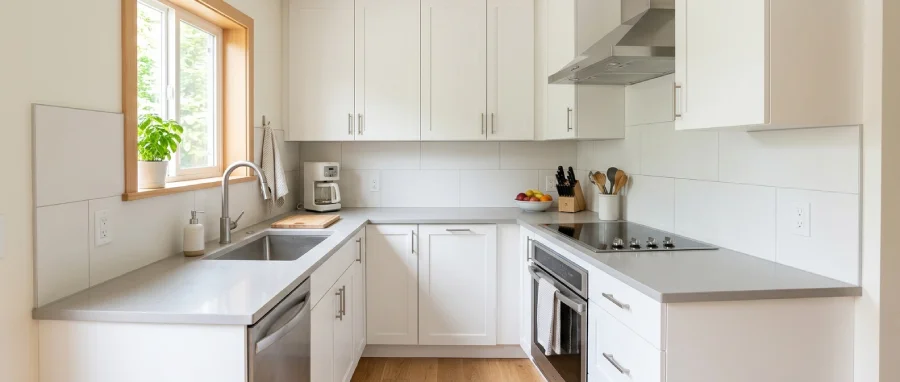
Larger tile can make a smaller space feel calmer because there are fewer grout lines.
In many Denver and Lakewood kitchen remodeling projects, that cleaner approach helps the room feel more efficient.
Mosaic Tile and Feature Areas
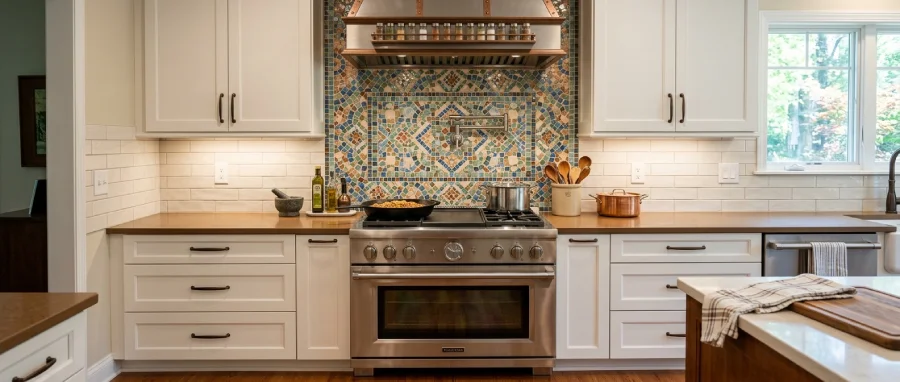
Mosaics and more intricate patterns can form a focal point, but they work best behind the stove or in a niche.
Decide on Color, Contrast, and Grout
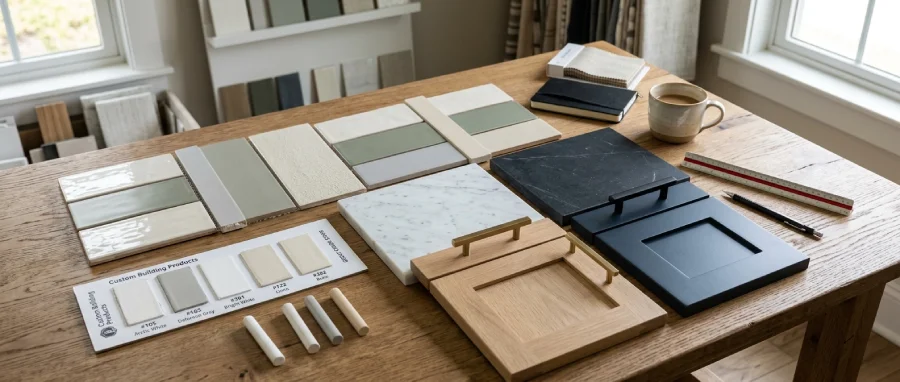
Once cabinets and countertops are selected, color and grout fine-tune the room.
Carefully chosen colors and patterns help the backsplash feel intentional without overpowering the room.
Think Carefully about Backsplash Height
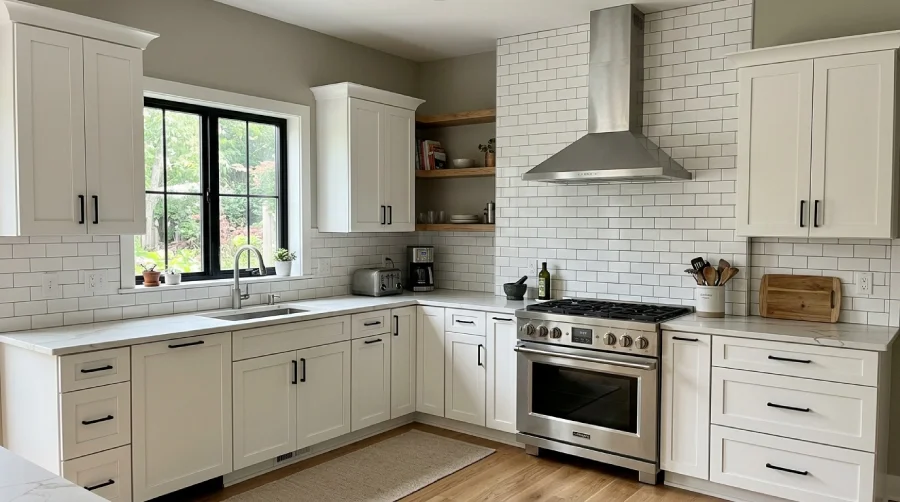
Height affects cost, maintenance, and style.
A shorter backsplash may suit a traditional layout and a tighter cost plan.
Taking the backsplash to the bottom of the upper cabinets creates stronger protection and a more finished look.
Running it to the ceiling on the range wall can feel dramatic and luxurious.
In kitchen remodeling, the right height depends on cabinet lines, the hood, nearby windows, and how you want the walls to read.
This is where an experienced contractor and design-build team can walk you through the options.
Build Your Kitchen Remodeling Budget Around the Whole Plan

A backsplash choice should fit the entire project, not just the sample in your hand.
Tile, labor, trim, grout, and replacing drywall all affect the final number.
Good designers and a skilled contractor can help you review materials, realistic budgets, sample possibilities, and one final request before construction.
When comparing samples in person, Floor & Decor Denver is one local resource homeowners often use to view tile more closely.
Homeowners planning a kitchen renovation often carry the same finish decisions into a bathroom remodel or future full-house updates.
Frequently Asked Questions About Backsplash Tile
A Design-Build Approach to Kitchen Remodeling in Denver

A successful kitchen renovation connects vision, quality, communication, and execution.
That is why many Denver homeowners prefer a design-build team that brings designers and construction professionals together early in the process.
An experienced kitchen remodeling contractor should explain how materials perform, provide a clear project blueprint, and help coordinate quality products, custom cabinetry, fixtures, and installation details.
At Verified Builders, homeowners can start with a free consultation to discuss their vision, project needs, and the best path forward for the remodel.
When the team and client stay aligned from selections through construction, the project moves more efficiently, and the final product is stronger.
You can browse more completed Denver remodeling projects and see how integrated planning shaped the main floor remodel in Parker.
If structural or layout changes are part of the project scope, especially in older Denver and Englewood homes, Denver offers guidance for homeowner permits.
Final thoughts before you start your kitchen renovation
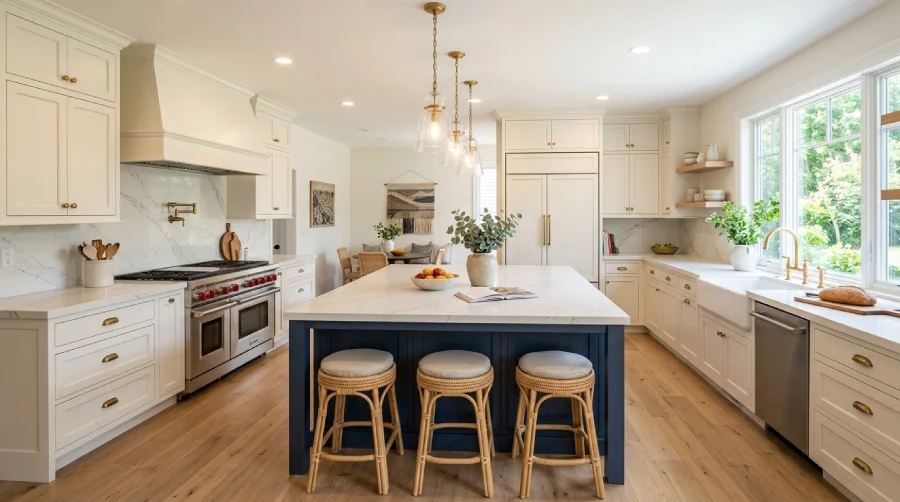
The best backsplash decisions happen when materials, layout, and daily use are considered together from the start.
A well-planned kitchen remodel can also add measurable value to your house, especially when the improvements balance everyday function, durable materials, and broad buyer appeal.
For people planning kitchen remodeling in Denver, the best results come from slowing down, reviewing the options, and treating the backsplash as part of the entire kitchen rather than an afterthought.
If you are ready to begin a remodel with thoughtful design, expert craftsmanship, and clear communication, Verified Builders can help you build a durable, complete kitchen.
