
Updated June 9, 2026 · By Joe, Interior Designer at Verified Builders
As an interior designer, I can tell you that the bathroom is almost always the smallest room I’m asked to make feel bigger.
It carries more daily objects per square foot than any other space in the house, and most of them have nowhere to live.
That tension is especially familiar here. Many Denver homes were built long before anyone owned a ten-step skincare routine, so the storage simply isn’t there.
The good news is that you rarely need more room. You need to use the room you have more intelligently.
Below are the bathroom storage ideas Denver homeowners reach for, from quick renter-friendly fixes to built-ins worth planning around. If you want a sense of where this fits into a larger refresh, our overview of Denver bathroom trends is a good companion read.
Why Bathroom Storage Is Tougher in Older Denver Homes
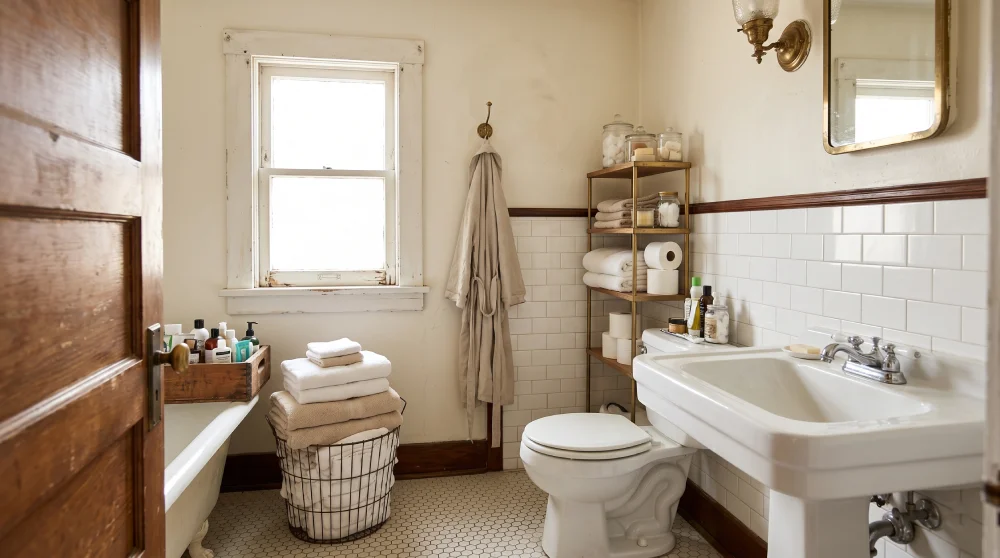
Denver’s most charming neighborhoods come with a catch.
The bungalows of Wash Park and Berkeley, the brick Victorians around Capitol Hill, the mid-century ranches farther out — many were built with a single compact bathroom and almost no closets.
That original footprint rarely included a linen closet, which is why towels and cleaning products end up stacked on the floor.
There’s also a climate factor that works in your favor. Denver’s high, dry air means moisture lingers far less than it does in humid coastal homes, so open storage and natural materials hold up beautifully here.
The challenge, then, isn’t damp. It’s square footage. The first move is always to take a hard look at what you’re working with, and if your bathroom also reads as cramped, a few of these moves double as ways to make a small bathroom look bigger.
Reading Your Floor Space, Especially in a Small Bathroom
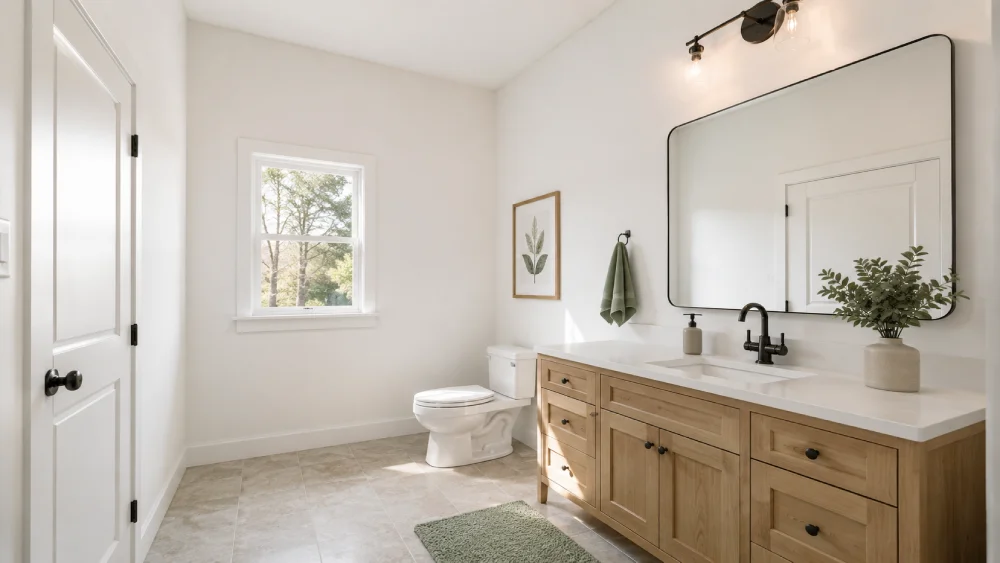
Before buying a single bin, I measure.
Every inch of floor space is contested in a bathroom, and the smaller the room, the more each inch matters, so I map what’s fixed — the toilet, the sink, the door swing — and what’s actually open.
Then I look up. The walls above eye level are usually empty, and that’s where most of your storage potential is hiding.
This quick audit tells you whether you need freestanding pieces, wall-mounted ones, or a combination. Skipping it is how people end up with organizers that don’t fit.
Make the Most of Vertical Space
The single most useful principle in a bathroom of any size is to think up, not out.
Maximizing storage almost always comes down to using vertical space that’s currently going to waste.
Here’s how I put those upper walls to work.
Wall-Mounted Shelves and Floating Shelves
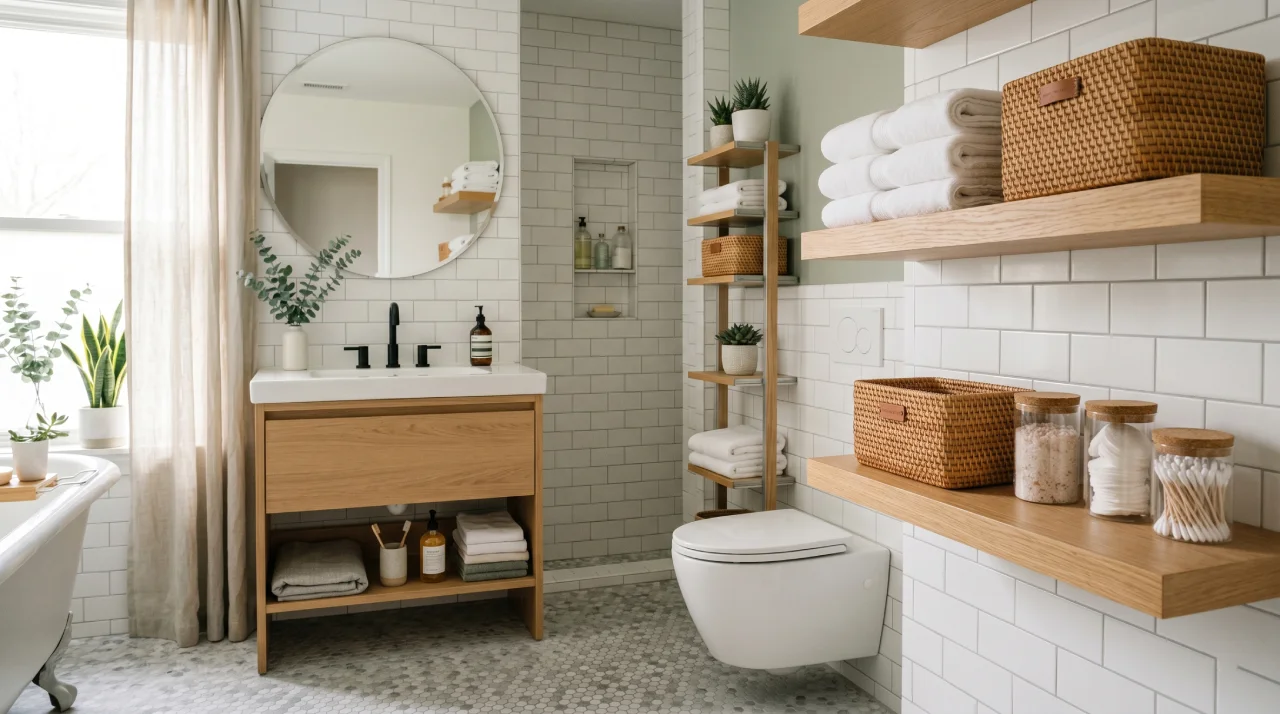
Open shelving is my first reach because it adds storage space without eating any floor space.
A row of wall-mounted shelves can comfortably hold around six folded towels, plus a basket or two for the small things.
I’m especially fond of floating shelves, and many styles now include a hidden drawer underneath — open display on top, closed storage below, in the same slim footprint.
Mounted at staggered heights, they read as intentional design rather than pure utility.
Over-the-Toilet Cabinets for More Storage
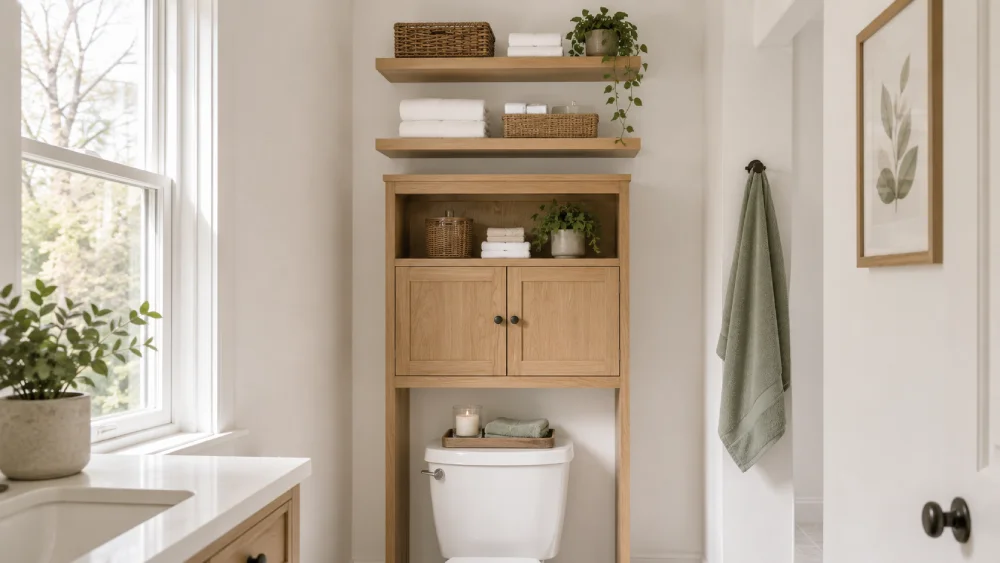
The wall above the toilet is the most overlooked square footage in any bathroom.
An over-the-toilet cabinet or étagère slips right over the tank and instantly adds two to four shelves of closed storage above the fixture.
If you want that area to deliver even more storage, choose a unit with doors on the lower portion to hide the less photogenic items.
It’s the highest-impact change you can make in an afternoon.
Don’t Overlook the Toilet Tank
The flat top of the toilet tank is small, but it’s prime real estate.
A shallow tray turns it into a tidy landing spot for a candle, a few cotton rounds, or a folded hand towel — corralled, not scattered.
Keep it curated. One tray, a few objects, nothing that will topple.
Under Sink Storage That Actually Works
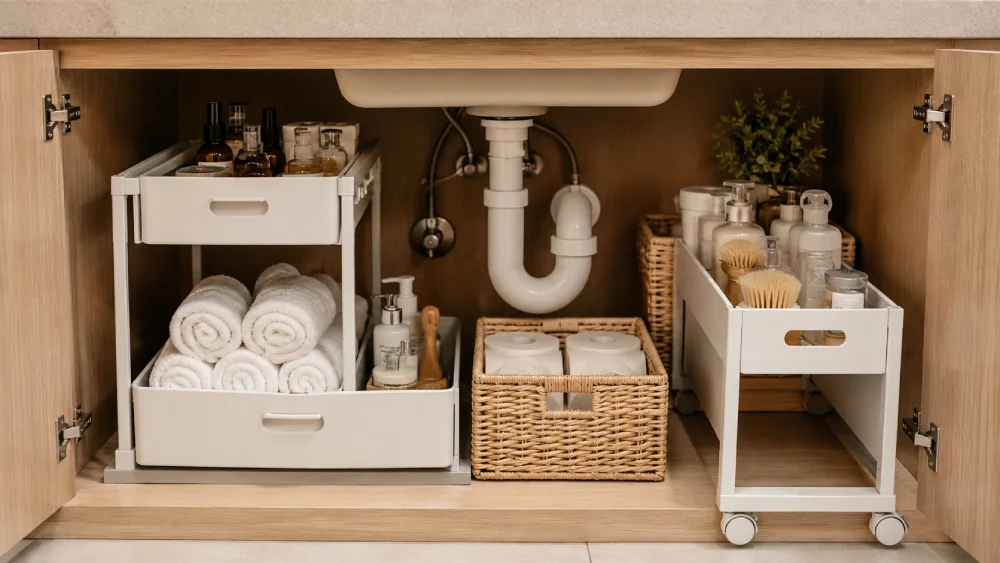
The cabinet beneath the sink is usually a chaotic cave of half-empty bottles fighting the plumbing.
Good under-sink storage is mostly about dividing that awkward volume so you can see and reach everything.
Tiered Organizers and Drawer Inserts
A tiered under-sink organizer can roughly double the usable capacity of a standard vanity cabinet by stacking a second working level above the first.
I pair it with pull-out drawer inserts that slide forward, so the back of the cabinet stops being a dead zone.
Group items by how often you use them, and keep the daily ones up front.
Rolling Caddies for Deep Cabinets
For deep cabinets, a rolling caddy is the trick.
It pulls all the way out for easy access to whatever migrated to the back, then rolls neatly away.
If you’re rethinking the vanity entirely, our guide to bathroom vanity ideas covers how the right cabinet can solve most of your storage at once.
Smart Towel Storage
Towels are bulky, used daily, and somehow always in the wrong place.
A little planning keeps them accessible without dominating the room.
Towel Rack and Towel Bar Placement
A wall-mounted towel rack is the workhorse here, and a multi-bar version can hold roughly six full-size towels in the space a single towel bar would occupy.
I place the primary bar within arm’s reach of the shower, never across the room where it’s useless when you’re dripping.
For a deeper look at displaying and storing them well, see our piece on bathroom towel storage ideas.
Towel Hooks for Quick Wins
When there’s no room for a bar, towel hooks are the fastest win in the house.
A short rail of hooks behind the bathroom door holds robes and hand towels off the floor, and it costs almost nothing.
Hooks also suit kids’ bathrooms, where folding is a fantasy.
Put the Walls, Doors, and Shower to Work
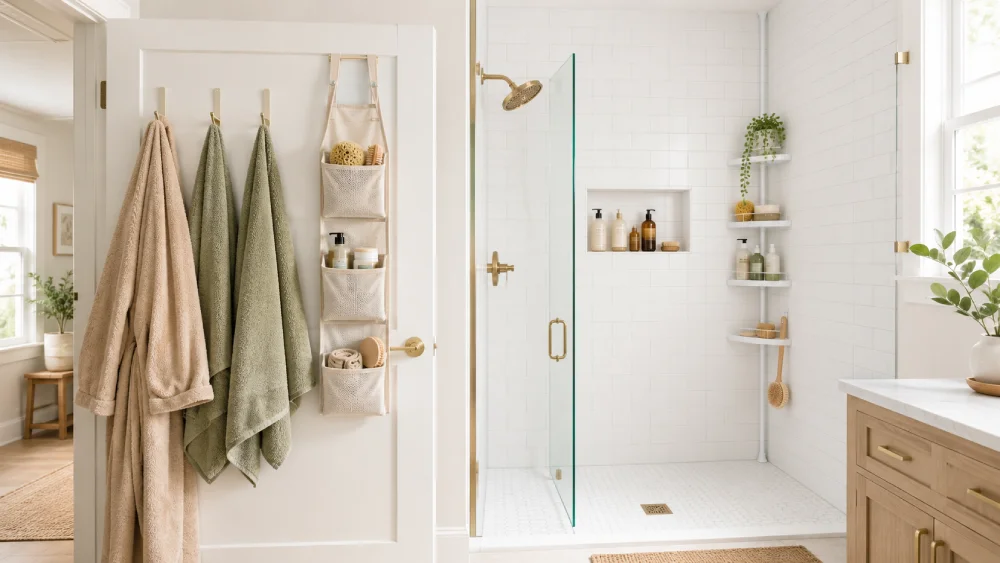
Beyond the obvious surfaces, three zones get ignored: the backs of doors, the bare walls, and the shower itself.
Self-Adhesive Hooks and Over-the-Door Organizers
Self-adhesive hooks skip the drill entirely, which makes them a designer’s secret weapon in spaces where you can’t put screws in the wall.
An over-the-door organizer adds a full vertical column of storage on the back of the bathroom door without damaging anything.
Most need only about 3.5 inches of clearance to swing shut, so measure the gap behind the door before you buy.
Both attach in minutes and come off cleanly, so they’re ideal when you want flexibility.
Storage on the Shower Wall
Inside the shower, the wall is your friend.
A recessed niche is the most elegant solution, but a sturdy corner shelf or a tension-mounted caddy works without any construction.
If you have an existing surround, our notes on what to put above a shower surround cover that often-wasted ledge.
Hide Clutter With Closed Storage and Baskets
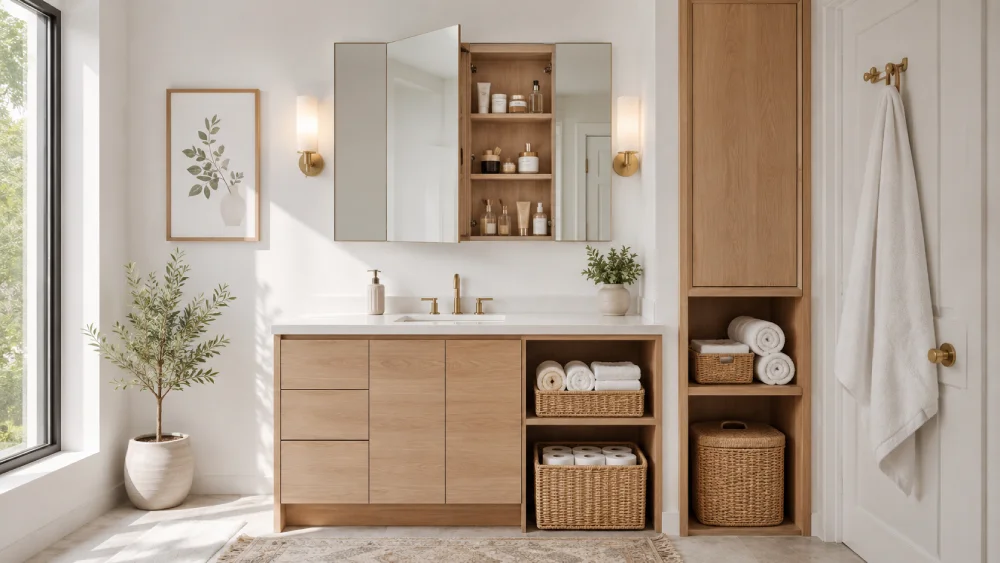
Open shelving looks wonderful until it’s covered in clutter.
The fix is balance: pair display with closed storage so the messy essentials disappear behind a door or inside a basket.
Medicine Cabinet Upgrades
The medicine cabinet is doing double duty as a mirror, so make it earn its keep.
A recessed model tucks into the wall cavity and reclaims counter space without projecting into the room.
Newer ones add interior shelves, defogging mirrors, and even hidden outlets for a toothbrush charger or hair dryer.
Baskets and Bins for Extra Rolls
Baskets are the easiest way to make practical storage look stylish.
A single woven rattan basket holds about three spare toilet paper rolls, so those extra rolls stay handy but out of sight.
I use matching bins for cleaning products and toiletries too, because cohesion is what reads as “designed” rather than “stuffed.”
Renter-Friendly Storage Ideas, No Drill Required
Plenty of Denver residents rent apartments and condos where drilling isn’t an option, and storage still has to happen.
The answer is anything freestanding, adhesive, or over-the-door — solutions that add real capacity without putting a single hole in the wall.
A narrow rolling cart, some under eight inches wide, slides into the slim gap between a vanity and the wall and becomes instant drawer space.
When you move, it all comes with you, and you leave the walls exactly as you found them. For more along these lines, our roundup of storage solutions for small Denver apartments is worth a look.
A Designer’s Healthy Habits for Storage That Lasts
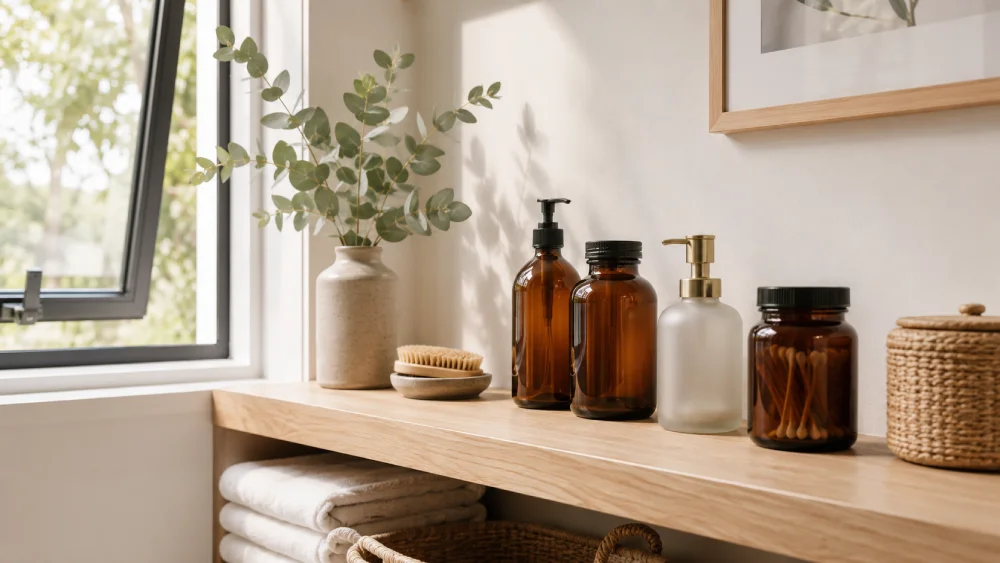
Storage that works on day one but collapses by month three isn’t storage. It’s a holding pattern.
These are the habits I leave clients with, so the system actually sticks.
Start by editing ruthlessly, because clearing out expired products and duplicates frees more room than any organizer ever will.
Then store what you reach for every morning at arm’s height between the sink and the mirror, and reserve the high shelves for backups and the seasonal things you touch twice a year. That one habit saves you a daily scavenger hunt.
Mind Moisture and Materials
Even in Denver’s dry climate, a bathroom still sees steam, so ventilation matters and a good fan is non-negotiable.
Choose finishes that tolerate humidity — sealed wood, powder-coated metal, and the right paint finish for a bathroom all keep your storage looking new far longer.
Keep medicine and cleaning products in closed, separated storage, especially in homes with children.
Style It So It Stays Neat
People maintain spaces that feel beautiful, so styling is a storage strategy, not an afterthought.
Decant into matching containers, leave a little breathing room on each shelf, and let one or two pretty objects earn their place, even in a small space.
For more quick wins, these small bathroom space-saving hacks layer nicely on top of everything above.
When Storage Isn’t Enough: Remodeling in Denver
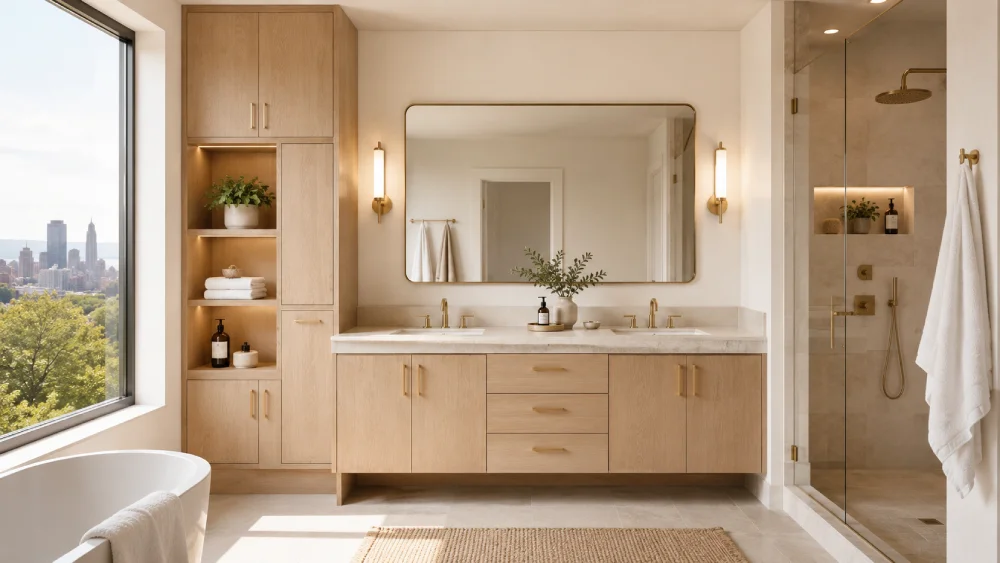
Sometimes the bones are the problem, and no amount of clever bins will fix a layout that’s fighting you.
That’s when built-in solutions earn their cost — recessed niches, a custom vanity sized to the room, or a wall of integrated cabinetry.
Anything that recesses into a wall or relocates plumbing moves into permit territory in Denver, so it’s work for a licensed contractor who’ll pull the right approvals.
If you’re weighing it, our take on how often you should remodel your bathroom helps with timing, and the team handles bathroom remodeling in Denver from design through the finished, storage-rich result.
Frequently Asked Questions
A Calmer, Clutter-Free Denver Bathroom
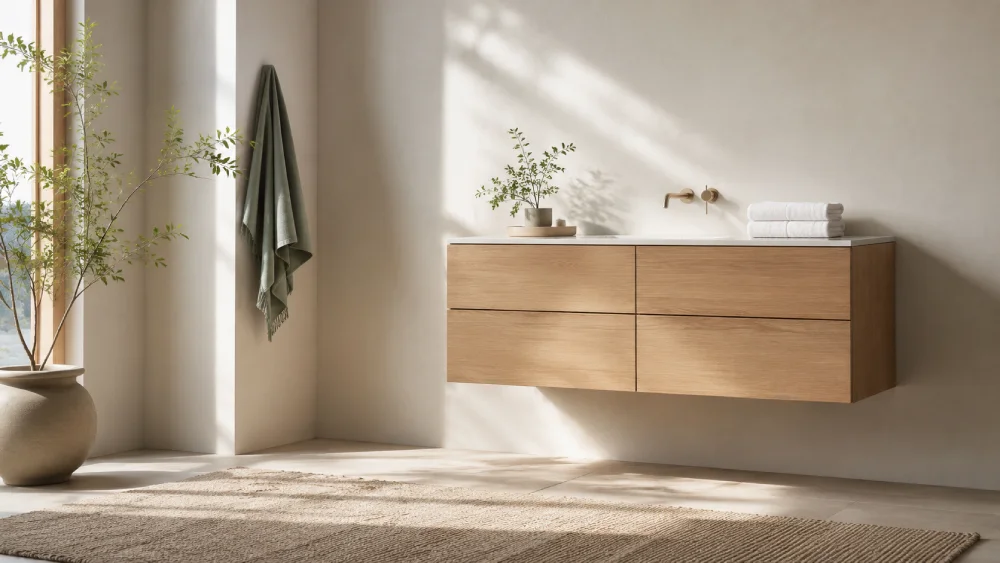
A well-stored bathroom isn’t about owning more containers. It’s about giving everything a logical home and letting the room breathe.
Start with one wall, one cabinet, or one basket, and build from there.
And when the layout itself is the limit, that’s the moment to bring in a professional and design the storage in from the start.