A Quick Answer:
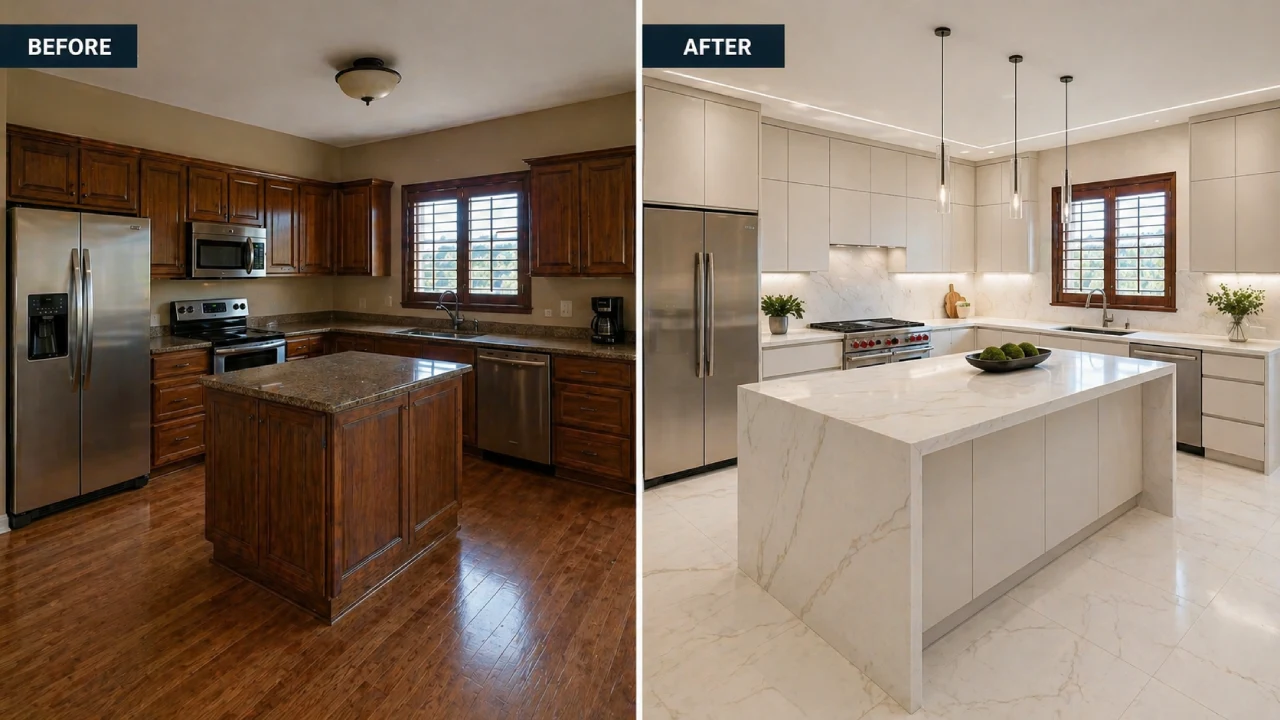
Most Denver homeowners should budget $35,000 to $60,000 for a mid-range kitchen remodel, while high-end projects can exceed $80,000 when custom cabinetry, premium appliances, or structural changes are involved.
Now, Let’s Get into the Actual Details
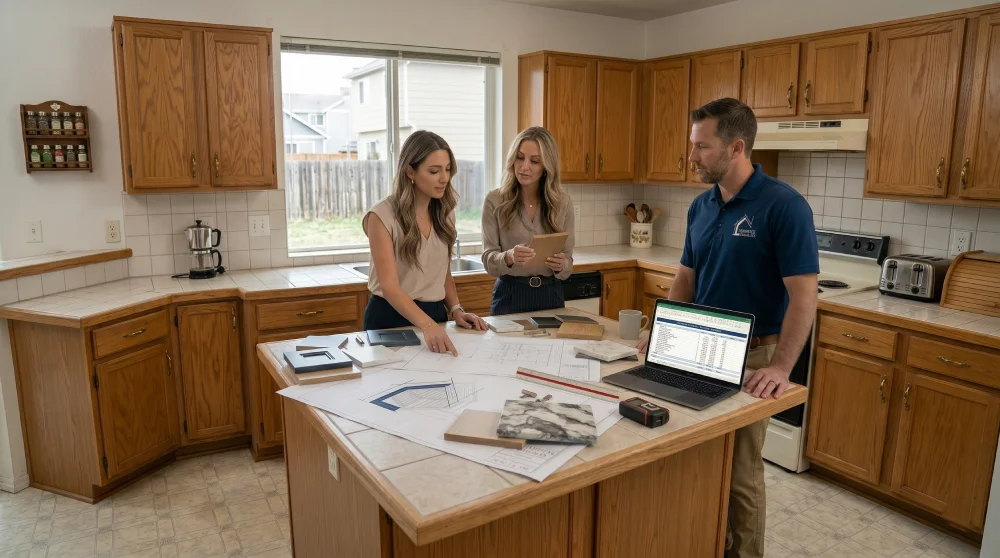
If you’re planning a kitchen remodel in the Denver metro area, you’re probably asking the same question most homeowners ask first: how much is this actually going to cost?
The answer depends on the size of your kitchen, the existing layout, the age of your home, your material choices, your cabinetry, your appliances, your flooring, your lighting plan, and whether your remodel includes structural changes.
In the Denver market, the typical kitchen remodel cost can vary widely based on scope, design complexity, labor, permit costs, and finish level.
As the Verified Builders interior designer team, we look at a kitchen remodel from two sides at once: the practical budget and the finished design experience.
A dream kitchen should look beautiful, but it also needs to function well, support daily life, improve resale appeal, and make sense for the home’s long-term value.
This guide breaks down kitchen remodel costs in Denver by category, material, square foot, layout, timeline, permits, hidden costs, and design decisions so you can compare kitchen renovation options with confidence.
Why Kitchen Remodel Costs in the Denver Metro Area Are Higher Than the National Average
Kitchen remodel costs in Denver are often higher than the national average.
That does not mean every project has to be expensive, but it does mean Denver homeowners should plan carefully before setting a budget.
The biggest pricing factors include:
- Labor demand
- Skilled trade availability
- Local codes
- Permit costs
- Energy requirements
- Older home conditions
- Material choices
- Neighborhood expectations
- Layout changes
- Structural work
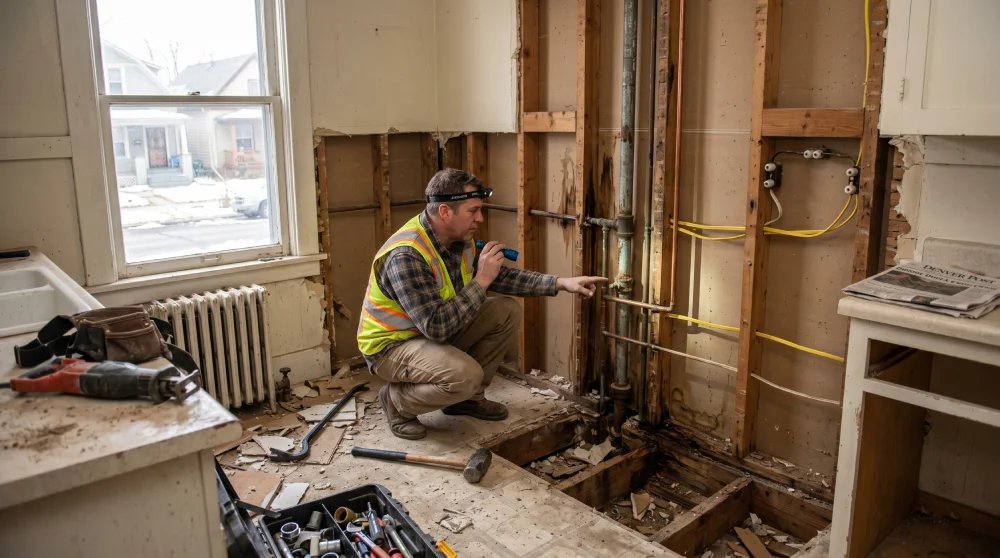
A kitchen remodel in a newer suburban home with an existing layout may be easier to price than a remodel in an older Denver home where demolition reveals outdated plumbing, uneven framing, or electrical issues.
Labor Costs in the Denver Market
Labor is one of the largest drivers of kitchen remodel cost in Denver.
Skilled labor in Denver can average roughly $52 per hour, while specialized trades may charge $80 to $150 per hour depending on experience, demand, and complexity.
Labor and skilled trades in Denver are often about 10% to 20% above national averages, largely because of high demand and a tight skilled-labor market.
A kitchen remodel may require several trades, including:
- Plumbers
- Electricians
- Cabinet installers
- Tile installers
- Flooring installers
- Countertop fabricators
- Drywall crews
- Framing crews
- Painters
- Finish carpenters
- General contractor oversight
The more complicated the remodel, the more labor affects the budget. Moving plumbing, replacing flooring, adding under-cabinet lighting, relocating appliances, upgrading electrical infrastructure, and removing walls all increase labor time.
Demand From Denver Homeowners
Many Denver homeowners are choosing to remodel rather than move. With housing costs still high in many parts of the Denver metro, a kitchen renovation can feel more practical than buying another home.
That demand affects remodel costs.
High-demand neighborhoods such as Cherry Creek, Wash Park, Hilltop, Highlands Ranch, and Centennial can see remodeling costs 15% to 25% higher than national averages, especially when projects include luxury finishes, custom cabinetry, premium appliances, and high-end finishes.
In these areas, homeowners often want:
- Larger islands
- Better storage
- Open layouts
- Quartz countertops
- Custom cabinetry
- Professional-grade appliances
- High-quality lighting
- Better flow into living areas
These choices can improve the final result, but they also affect the final cost.
Local Codes, Permits, and Energy Requirements
Necessary permits are often required when a kitchen remodel includes electrical work, plumbing changes, moving walls, structural changes, or major renovations.
Permit costs in Denver can typically range from $200 to $2,500, depending on the scope.
For projects valued between $50,000 and $100,000, Denver permit fees may include a base fee of around $420, though the final price depends on valuation and project details.
Recent Colorado energy codes can also affect kitchen remodel cost. Some remodels may require:
- Electrical panel upgrades
- Additional circuits
- Updated ventilation
- Dedicated appliance circuits
- Safety upgrades
- New electrical infrastructure
Electrical panel upgrades can cost $2,000 to $4,000+, while broader electrical infrastructure changes can add $2,000 to $10,000+, depending on the home.
Failing to obtain necessary permits can lead to:
- Delays
- Fines
- Inspection issues
- Additional fees
- Rework
- Problems during resale
Permit planning should be part of the budget from the beginning, not something discovered after construction starts.
Older Homes and Hidden Costs
Many homes in the Denver metro were built before 1980.
Older homes can have character, but they can also create hidden costs once demolition begins.
Common older-home issues include:
- Outdated plumbing
- Knob-and-tube wiring
- Undersized electrical panels
- Asbestos materials
- Lead-related concerns
- Poor ventilation
- Uneven floors
- Framing issues
- Old drain lines
- Subfloor damage
- Non-code-compliant previous work
These unexpected expenses can change the final cost quickly.
That is why Denver homeowners should plan for a 15% to 20% contingency fund.
Average Kitchen Remodel Cost in Denver by Project Type
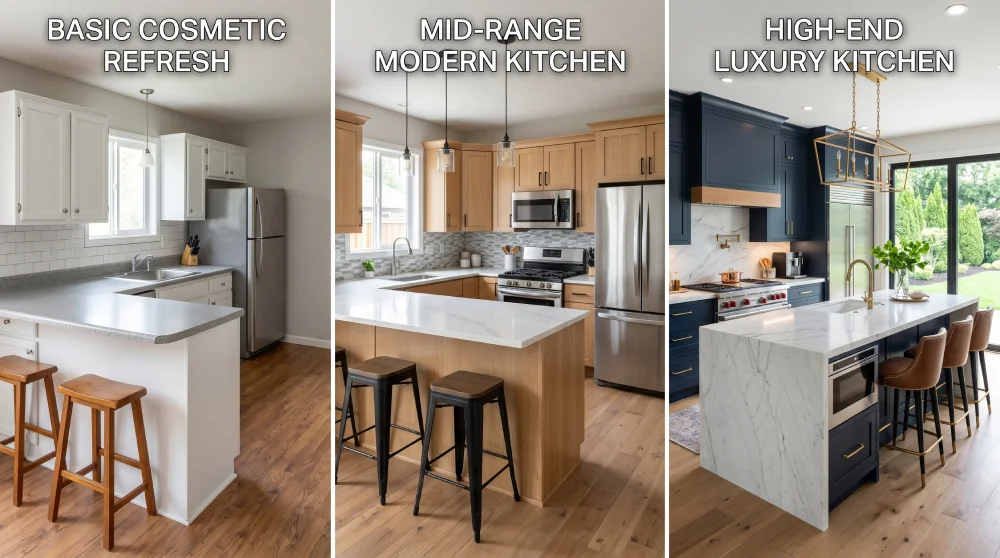
The average kitchen remodel cost depends on the project type.
A cosmetic refresh is very different from a full kitchen renovation with custom cabinetry, quartz countertops, new appliances, new lighting, replacing flooring, and structural changes.
A cosmetic kitchen refresh typically costs between $7,000 and $12,000 and focuses on refreshing existing elements rather than complete replacements.
A mid-range kitchen remodel generally allows for:
- Semi-custom cabinetry
- New counters
- Energy-efficient appliances
- Updated flooring
- Better lighting
- Some layout changes
- Improved storage
- Modern finishes
A high-end kitchen remodel may include:
- Custom cabinetry
- Premium appliances
- Professional-grade appliances
- Luxury finishes
- Moving plumbing
- Moving walls
- Structural work
- Significant layout changes
- High-end countertop materials
- Custom lighting design
The typical range is helpful, but the final price depends on how much of the kitchen is being changed.
Cost Per Square Foot for Kitchen Remodeling in Denver
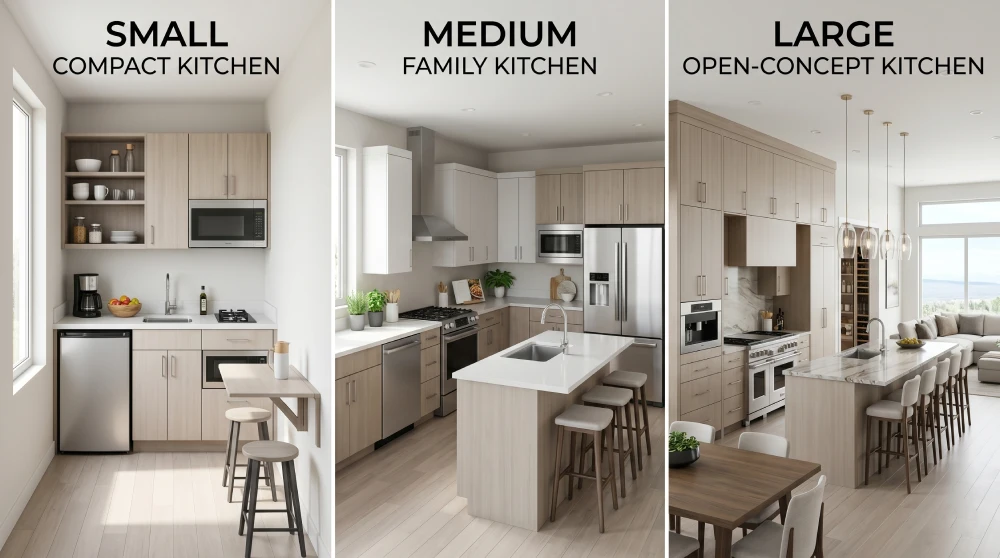
In Denver, kitchen remodeling costs typically range from $190 to $375 per square foot, depending on the scope and materials used.
Cost per square foot is useful for early budget planning, but it does not tell the whole story.
Two kitchens with the same square footage can have very different remodel costs if one keeps the existing layout and the other requires moving plumbing, structural work, new cabinetry, and professional-grade appliances.
A small kitchen can still become expensive if it includes custom cabinetry, new counters, moving plumbing, premium appliances, and structural changes.
A large kitchen can stay more controlled if the existing layout remains in place and the homeowner chooses mid-range materials.
Cost in Denver depends heavily on:
- Kitchen size
- Existing layout
- Material choices
- Cabinetry
- Appliances
- Plumbing
- Electrical work
- Flooring
- Lighting
- Permit costs
- Labor
- Structural changes
Full Kitchen Remodel Cost Breakdown by Category
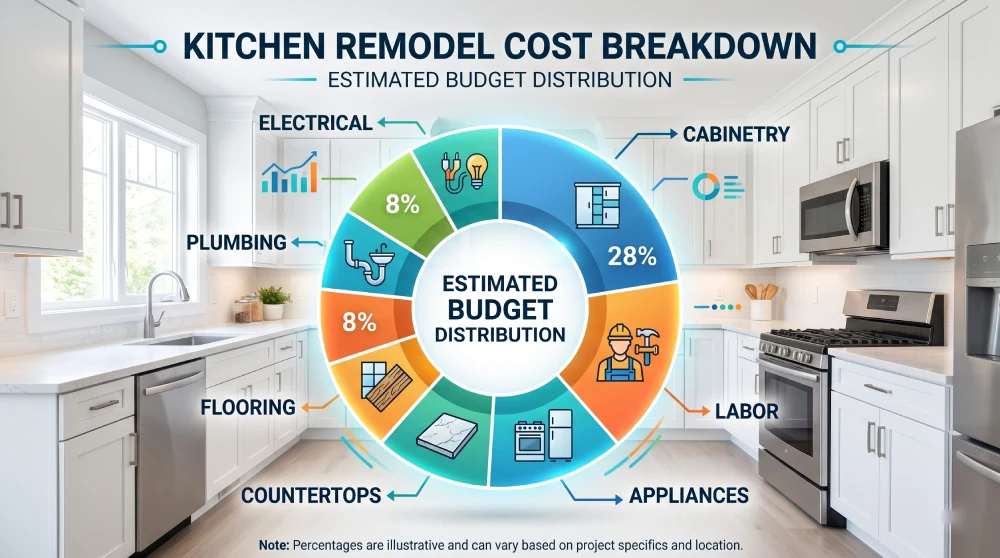
A kitchen remodel budget is usually divided across cabinetry, countertops, appliances, labor, flooring, plumbing, electrical, lighting, permits, and design planning.
For most Denver remodel projects, the largest budget drivers are:
- Cabinetry
- Labor
- Appliances
- Countertops
- Plumbing and electrical work
- Structural changes
- Permit costs
This breakdown helps homeowners decide where to invest and where to save.
For example, cabinetry and countertops create a strong visual impact, while plumbing and electrical work may be less visible but are critical for safety, functionality, and code compliance.
Cabinet Costs in a Denver Kitchen Remodel
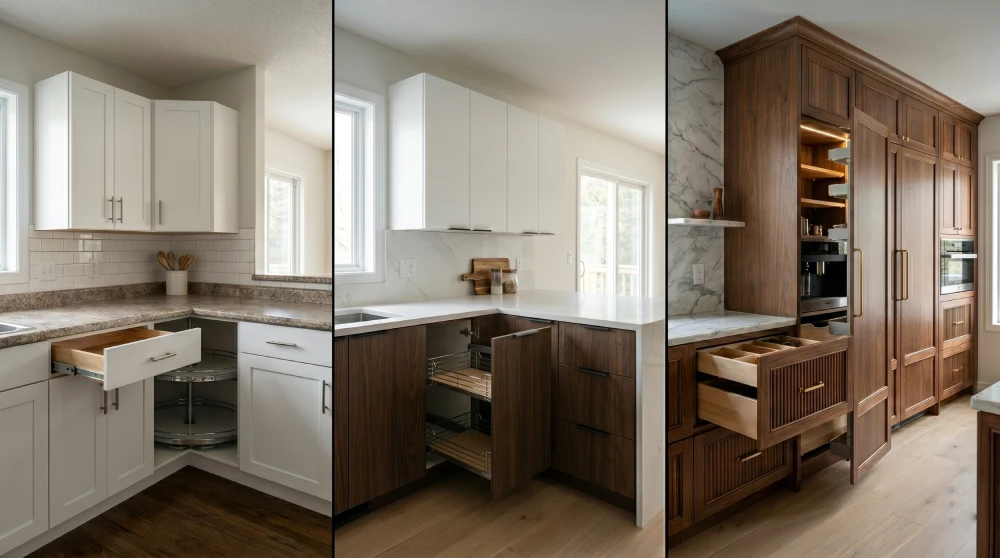
Cabinetry is usually the most expensive part of a kitchen remodel.
It can account for 29% to 35% of the total remodeling budget, especially when homeowners choose custom cabinetry or semi-custom cabinetry.
Cabinets affect:
- Storage
- Layout
- Traffic flow
- Appliance placement
- Countertop measurements
- Hardware selections
- Lighting placement
- Overall design style
- Resale appeal
For a deeper cost breakdown, see Verified Builders’ guide on how much it costs to replace kitchen cabinets.
Semi-custom cabinetry is often the best fit for a mid-range remodel because it gives homeowners more flexibility than stock cabinets without the full cost of custom cabinetry.
Custom cabinetry is ideal when:
- The kitchen has unusual dimensions
- Storage needs are specific
- The homeowner wants built-in organization
- Appliances require custom panels
- The design includes a specialty island
- Luxury finishes are part of the plan
- The kitchen must coordinate with surrounding living areas
Existing Cabinets vs New Cabinetry
Keeping existing cabinets may reduce remodel costs if the boxes are still solid.
This can work well when:
- The layout already functions
- Cabinet boxes are structurally sound
- The budget is limited
- The remodel is mostly cosmetic
- Repainting cabinets will achieve the desired look
- The homeowner wants modest updates
New cabinetry makes more sense when:
- Existing cabinets are damaged
- Storage is poor
- The layout is outdated
- Appliances are being relocated
- The homeowner wants a full redesign
- Resale appeal matters
- Cabinet heights or depths no longer work
- Existing cabinets cannot support new counters
Repainting cabinets can be a smart option for a minor kitchen remodel.
However, if the kitchen needs better function, more storage, or significant layout changes, new cabinetry is usually the better long-term decision.
For help choosing styles, storage features, and cabinet construction, review this guide on how to choose the right cabinetry for your kitchen.
Countertop Costs and Material Comparison
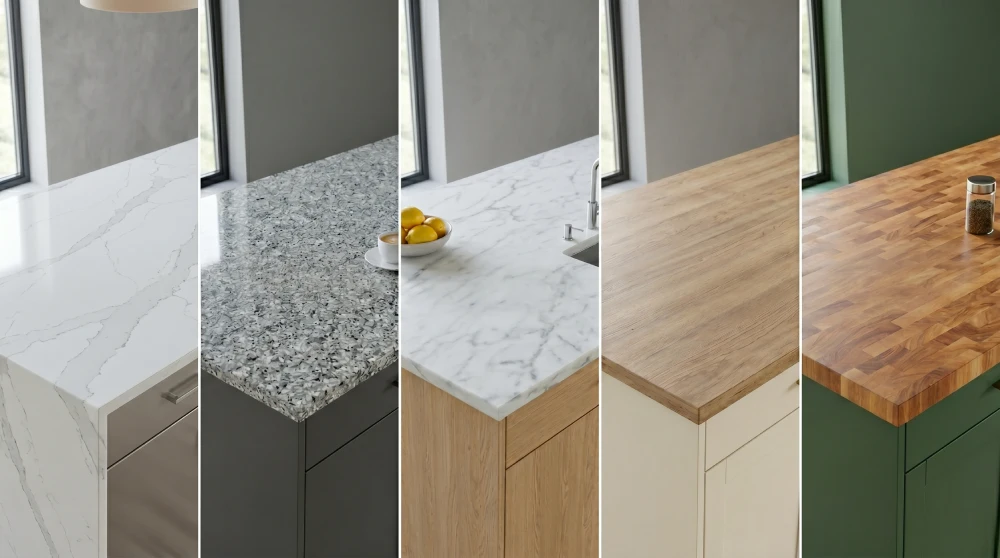
Countertops are one of the most visible design elements in a kitchen remodel.
They also take daily abuse from cooking, cleaning, entertaining, and everyday use.
Countertop costs vary based on:
- Material
- Slab availability
- Fabrication
- Edge profile
- Installation complexity
- Island size
- Waterfall edge details
- Sink cutouts
- Backsplash decisions
Quartz countertops are popular in the Denver market because they offer:
- Strong durability
- Low maintenance
- Consistent color options
- Modern design flexibility
- Strong resale appeal
- Good performance for daily life
Granite still makes sense for homeowners who want:
- Natural stone movement
- Unique slab patterns
- Strong heat resistance
- A more organic look
- Long-term value
Laminate countertops can work for modest updates, rental properties, or temporary budget-conscious renovation options.
However, they do not usually offer the same resale appeal as quartz countertops, granite, or higher-end materials.
For homeowners considering lighter stone, this guide explains when to choose white granite countertops.
For a higher-end focal point, see these kitchen waterfall island design and material ideas.
Appliance Costs in a Denver Kitchen Remodel
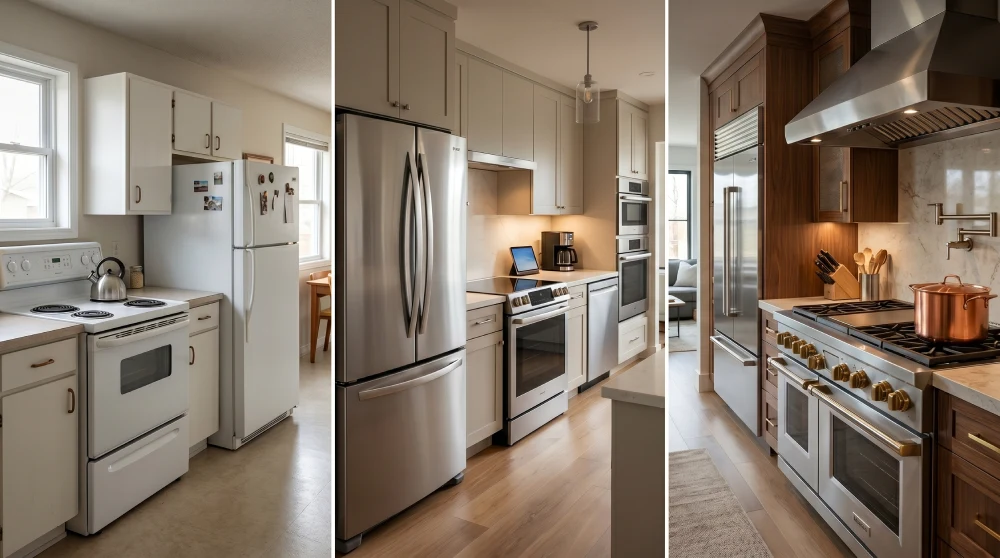
Appliances can shift the final cost by thousands of dollars.
The choice between standard appliances, energy-efficient appliances, premium appliances, and professional-grade appliances can strongly affect the budget.
Appliance choices affect more than the appliance budget.
They can also impact:
- Cabinet dimensions
- Ventilation
- Electrical requirements
- Plumbing placement
- Layout planning
- Countertop fabrication
- Delivery timeline
- Permit requirements
- Final price
Professional-grade appliances can add $10,000 to $20,000+ to the budget when they require special ventilation, dedicated circuits, or custom cabinetry modifications.
Energy-efficient appliances may cost more upfront, but they can support long-term value, lower operating costs, and better performance.
Flooring Costs for Kitchen Remodels

Flooring affects comfort, durability, cleaning, and the visual connection between the kitchen and nearby living areas.
Replacing flooring may be necessary when cabinets are moved, walls are removed, or the existing flooring does not continue under old cabinets.
Replacing flooring may be necessary when:
- Cabinets are moved
- Walls are removed
- The layout changes
- Existing flooring does not continue under cabinets
- The floor is damaged
- The kitchen needs better water resistance
- The kitchen must visually connect to living areas
Hardwood works well when homeowners want warmth and flow between the kitchen and living areas.
Tile is highly durable and water-resistant.
Luxury vinyl is popular for cost-conscious remodels because it offers durability, water resistance, and a lower final price.
For more guidance, see Verified Builders’ guide to the best flooring for kitchen remodels.
Plumbing and Electrical Costs
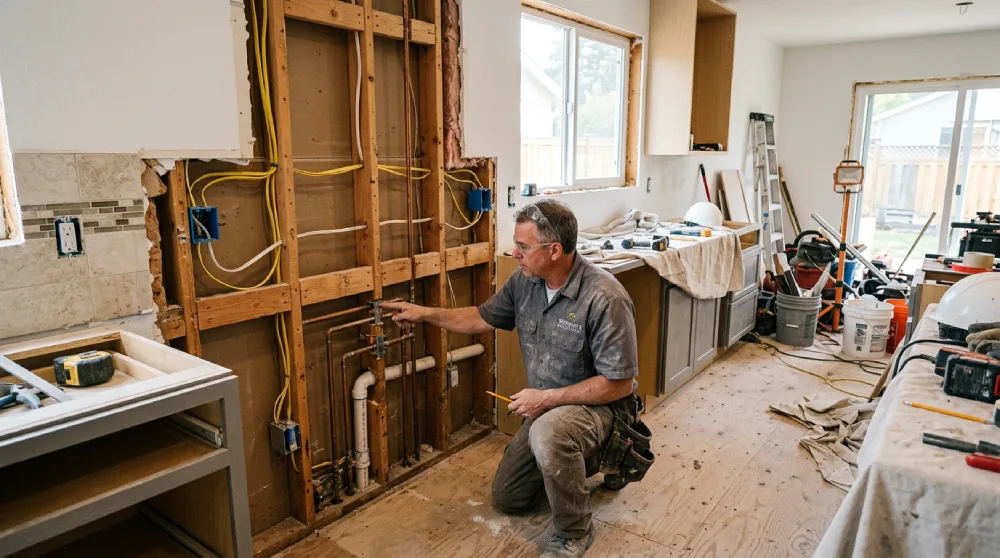
Plumbing and electrical work are two of the most underestimated parts of the kitchen remodel cost.
A homeowner may focus on cabinets and countertops first, but plumbing and electrical decisions often determine whether the remodel stays within budget.
Common plumbing cost factors include:
- Moving plumbing lines
- Relocating a sink
- Relocating a dishwasher
- Adding a pot filler
- Replacing outdated pipes
- Updating drain lines
- Adding water lines for new appliances
- Improving shutoff access
- Correcting previous non-code work
Common electrical cost factors include:
- Adding outlets
- Installing under-cabinet lighting
- Adding pendant lighting
- Upgrading circuits
- Installing dedicated appliance circuits
- Upgrading the electrical panel
- Adding smart lighting controls
- Meeting current energy codes
- Improving task lighting
- Adding recessed lighting
Moving plumbing can cost $2,000 to $10,000+, depending on distance, access, and complexity.
Electrical panel upgrades may cost $2,000 to $4,000+, and broader electrical infrastructure changes can add significantly more.
Under-cabinet lighting is a small detail that can change how the entire kitchen feels.
It improves task lighting, highlights the backsplash, and gives the kitchen a more finished appearance.
Kitchen Layout Changes and Their Impact on Cost
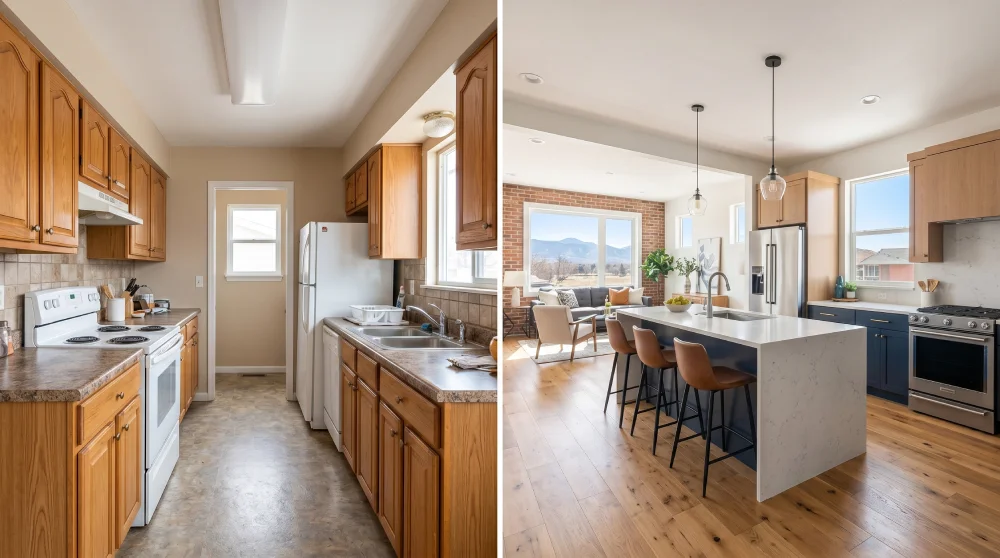
Layout changes are one of the biggest reasons kitchen remodel costs vary based on scope.
A kitchen that keeps the existing layout is usually easier to price.
A kitchen that moves plumbing, relocates appliances, removes walls, or expands into living areas requires more labor, inspections, and often more structural work.
Keeping the existing layout can help reduce:
- Plumbing work
- Electrical work
- Permit costs
- Labor hours
- Structural work
- Timeline delays
- Unexpected expenses
Significant layout changes may be worth it when:
- The kitchen feels cramped
- Traffic flow is poor
- Storage is limited
- The kitchen is closed off from living areas
- The homeowner wants an island
- The existing layout does not support daily life
- The home needs better connection between kitchen and living areas
This comparison of kitchen peninsula vs island layouts can help homeowners understand how layout affects function, flow, and budget.
For smaller homes, an open-concept design can make the kitchen feel larger and more connected.
See these ideas for a small house open concept kitchen and living room.
Permit Costs and Local Code Considerations in Denver
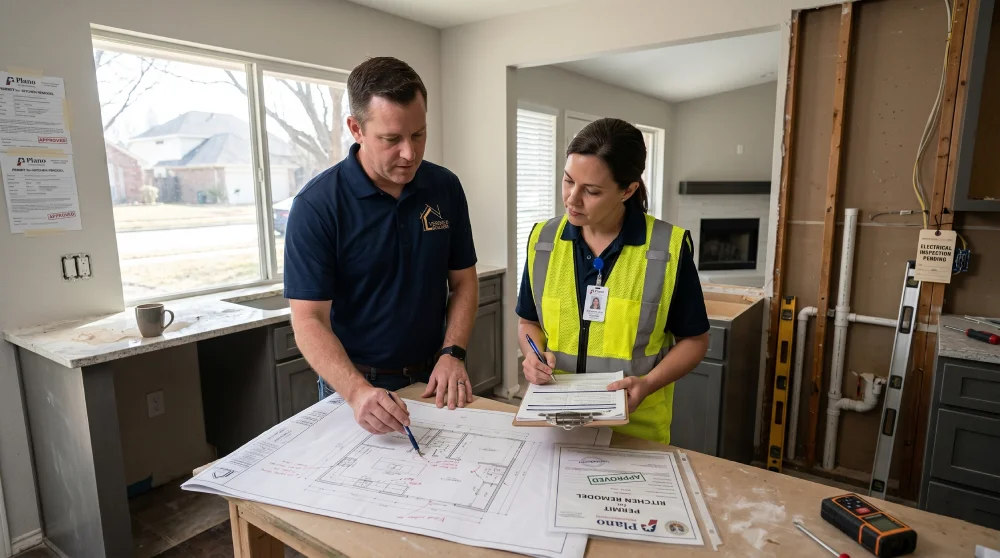
Permits are not just paperwork. They protect the homeowner, help ensure code compliance, and reduce future issues when selling the home.
In Denver, obtaining the necessary permits for kitchen remodels is essential when making electrical, plumbing, or structural changes.
Permit costs typically range from $200 to $2,500, depending on project scope and neighborhood requirements.
Permits may be required for:
- Moving plumbing
- Moving walls
- Electrical upgrades
- Structural changes
- New circuits
- Panel upgrades
- Major renovations
- Load-bearing wall changes
- Ventilation changes
Local codes can affect lighting, ventilation, electrical capacity, appliance installation, and structural changes.
A qualified contractor should identify permit requirements early, so they are included in the budget instead of becoming additional fees later.
Hidden Kitchen Remodel Costs Denver Homeowners Should Plan For

Hidden costs are one of the biggest reasons kitchen remodel projects exceed the original budget.
Some hidden costs are discovered during demolition.
Others appear when older plumbing, electrical systems, subfloors, or framing are exposed.
Other hidden costs may include:
- Temporary kitchen setup
- Eating out during construction
- Material delivery fees
- Storage fees
- Change orders
- Subfloor repairs
- Drywall repairs
- Ventilation upgrades
- Fixture upgrades
- Additional inspection requirements
- Hardware upgrades
- Disposal fees
- Delayed material replacements
A smart budget should include a contingency fund of 15% to 20%.
That cushion helps Denver homeowners handle unexpected expenses without sacrificing essential design decisions.
Kitchen Remodel Timeline in the Denver Metro Area
Most kitchen remodel projects in the Denver metro take 6 to 12 weeks once construction begins, but the full process can take longer when design, planning, permits, and material ordering are included.
The timeline can increase when the remodel includes:
- Custom cabinetry
- Special-order countertops
- Luxury finishes
- Major renovations
- Structural changes
- Permit delays
- Moving plumbing
- Electrical upgrades
- Premium appliances
- Specialty tile
- Custom storage features
A minor kitchen remodel may move quickly.
A mid-range kitchen remodel with new cabinetry, new counters, replacing flooring, and new lighting takes longer
Luxury renovations with structural changes, custom cabinetry, and premium appliances require more coordination.
Step-by-Step Kitchen Remodeling Process
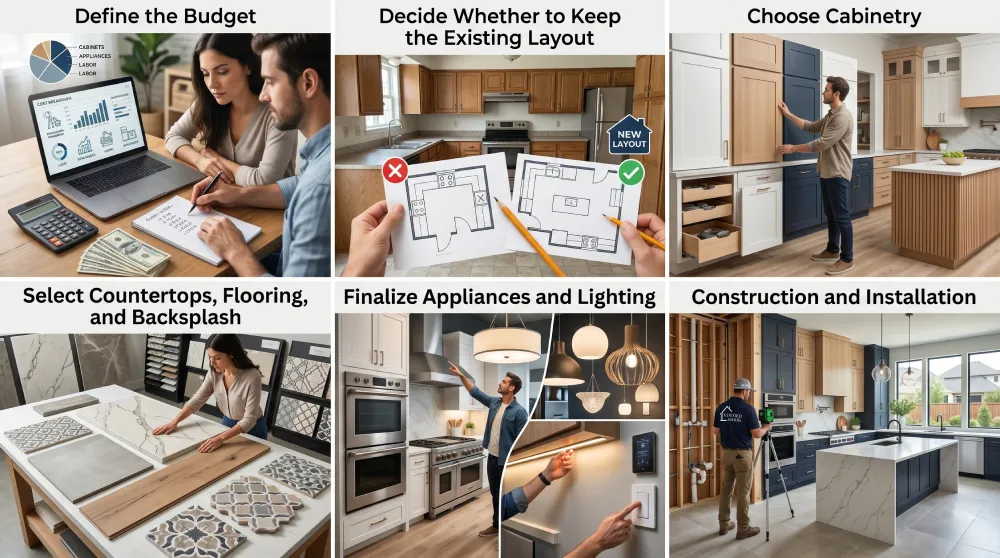
A successful kitchen remodel starts with planning. Before selecting countertops or appliances, homeowners should define the budget, priorities, layout, and long-term goals.
Verified Builders offers remodeling planning and design services for homeowners who want a structured process before construction begins.
Step 1: Define the Budget
Start with a realistic budget range, then add a contingency fund.
Budget planning should include:
- Labor
- Cabinetry
- Countertops
- Appliances
- Flooring
- Plumbing
- Electrical
- Lighting
- Permits
- Hidden costs
- Design support
- Contingency
Do not plan the full budget down to the last dollar. In Denver remodel projects, hidden costs are common enough that contingency planning is essential.
Step 2: Decide Whether to Keep the Existing Layout
Keeping the existing layout usually controls cost.
Changing the layout may improve function, but it can also increase:
- Plumbing costs
- Electrical costs
- Permit costs
- Labor costs
- Structural work
- Timeline length
This is one of the biggest early decisions in any kitchen remodel.
Step 3: Choose Cabinetry Early
Cabinetry affects:
- Layout
- Storage
- Appliance dimensions
- Countertop measurements
- Timeline
- Budget
- Final design style
- Hardware selection
- Lighting placement
Semi-custom cabinetry and custom cabinetry may have longer lead times, so these decisions should not be delayed.
Step 4: Select Countertops, Flooring, and Backsplash
Countertops, flooring, and backsplash should work together visually.
The backsplash is especially important because it connects:
- Cabinets
- Countertops
- Lighting
- Hardware
- Wall color
- Overall kitchen style
For more design help, see these guides on how to choose the right backsplash for your kitchen and kitchen backsplash ideas.
Step 5: Finalize Appliances and Lighting
Appliances affect cabinetry dimensions, electrical needs, ventilation, and layout.
Lighting should include:
- Task lighting
- Ambient lighting
- Accent lighting
- Under cabinet lighting
- Pendant lighting
- Natural light planning
- Recessed lighting where appropriate
Good lighting can make a mid-range remodel feel more polished and intentional.
Step 6: Construction and Installation
Construction may include:
- Demolition
- Framing
- Plumbing rough-in
- Electrical rough-in
- Inspections
- Drywall
- Flooring
- Cabinet installation
- Countertop templating
- Countertop installation
- Backsplash installation
- Appliance installation
- Final punch list
This is where planning matters. The more decisions made before construction, the fewer delays and change orders during the remodel.
How to Save Money on a Kitchen Remodel in Denver
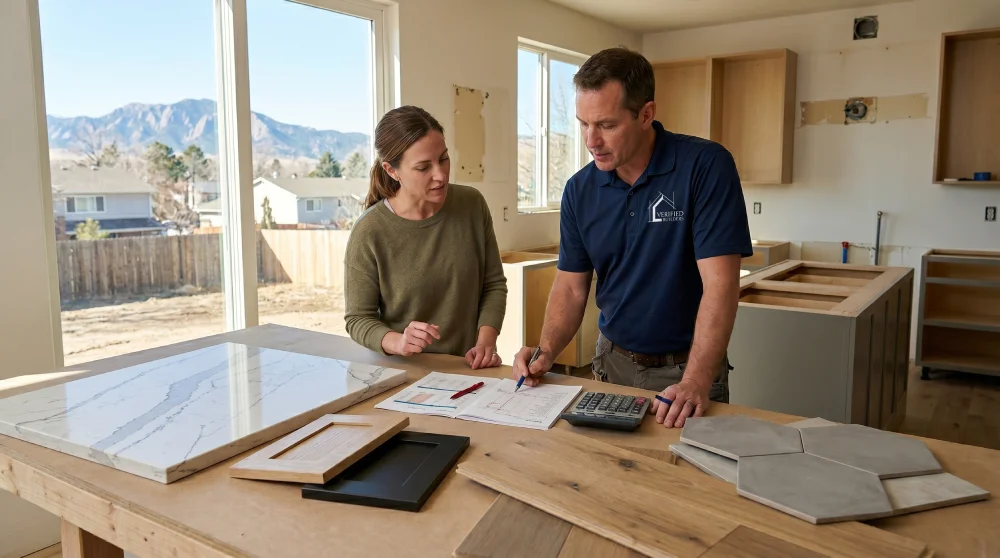
Saving money does not mean choosing the cheapest options everywhere.
It means making strategic decisions that protect the budget while preserving function, durability, and resale appeal.
Smart Ways to Save
- Keep the existing layout
- Avoid unnecessary structural changes
- Choose semi-custom cabinetry
- Repaint existing cabinets if they are in good condition
- Use quartz strategically
- Choose durable mid-range flooring
- Avoid moving plumbing unless necessary
- Select energy-efficient appliances without overbuying
- Keep the backsplash design clean
- Finalize selections before construction starts
- Avoid last-minute material changes
- Choose long-lasting finishes over trendy details
A mid-range remodel often gives Denver homeowners the best balance of cost, design, and long-term value.
Kitchen Design Considerations That Affect Cost
From an interior designer’s perspective, the goal is to create a kitchen that functions beautifully without wasting budget.
Design choices that affect kitchen remodel cost include:
- Cabinet door style
- Cabinet construction
- Countertop material
- Island size
- Backsplash material
- Flooring type
- Lighting design
- Appliance package
- Hardware
- Sink and faucet quality
- Open concept changes
- Custom storage inserts
- Paint colors
- Trim details
- Finish coordination
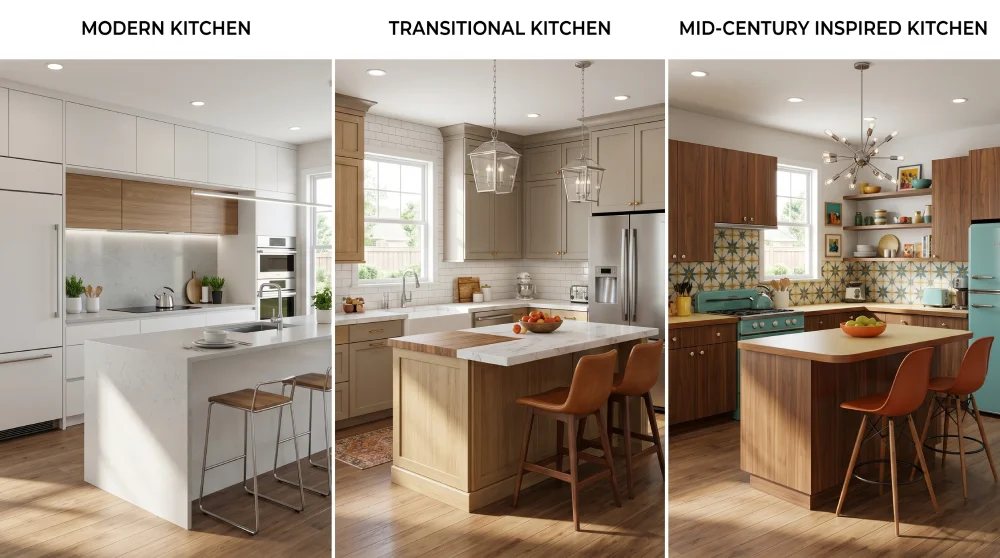
Modern, Transitional, or Mid-Century Design
Design style affects cabinetry, lighting, hardware, flooring, and material choices.
A modern kitchen may use:
- Slab cabinet doors
- Integrated appliances
- Quartz countertops
- Minimal hardware
- Clean lighting
- Waterfall island details
A transitional kitchen may include:
- Shaker cabinetry
- Warm wood tones
- Classic tile
- Mixed metals
- Soft neutral colors
- More timeless finishes
For homeowners considering a specific design direction, this guide explores whether a mid-century modern kitchen is right for your home.
Luxury Modern Kitchen Features
Luxury kitchens often include:
- Custom cabinetry
- Professional-grade appliances
- Waterfall islands
- Paneled refrigeration
- Large-format backsplash slabs
- Premium lighting
- High-end finishes
- Specialty storage
- Statement hardware
- Integrated smart features
For high-end inspiration, see these tips for modern kitchen designs.
Full Home Context
Kitchen remodel decisions should also consider the rest of the home.
If the kitchen connects to dining rooms, living areas, or entry spaces, finishes should support the broader interior design.
For homeowners planning more than one space, a full house remodeling project may create better design continuity and long-term value than remodeling the kitchen in isolation.
Kitchen Remodel Cost by Denver Metro City
Kitchen remodel cost in Denver and nearby cities can vary based on home values, labor availability, neighborhood expectations, home age, and project complexity.
These are planning ranges, not fixed prices.
Costs vary based on:
- Layout
- Home age
- Labor availability
- Cabinetry
- Appliances
- Permits
- Structural changes
- Finish level
- Neighborhood expectations
- Square foot size
- Material availability
A small kitchen in Cherry Hills Village with luxury finishes may cost more than a larger kitchen in Aurora with modest updates.
The biggest budget swings usually come from cabinetry selections, trade labor, appliance upgrades, permit requirements, and whether the kitchen footprint changes.
ROI: Is a Kitchen Remodel Worth It in Denver?
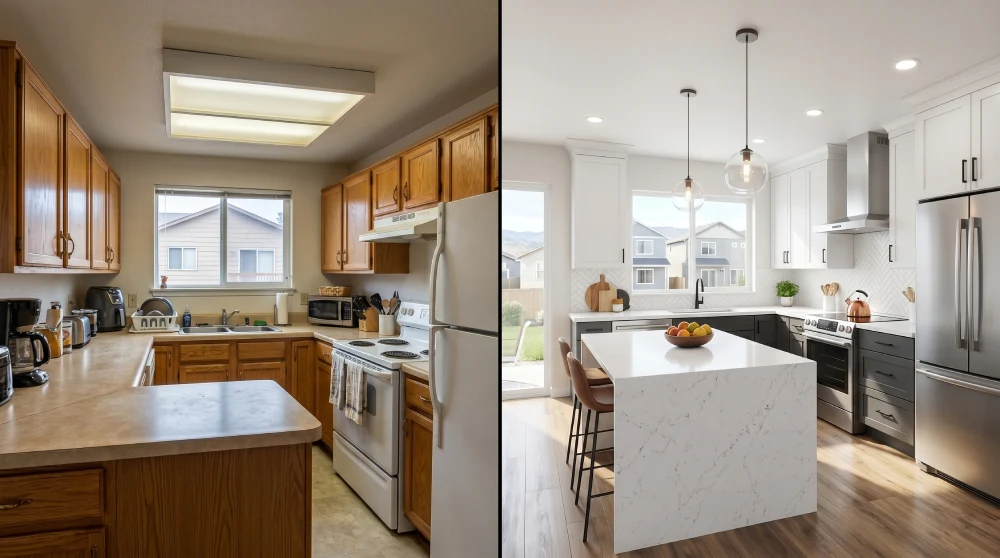
A kitchen remodel can improve daily life, resale appeal, and long-term value.
For many homeowners, the kitchen is the most important room in the house because it affects cooking, storage, entertaining, family routines, and first impressions.
Best kitchen upgrades for resale appeal include:
- Updated cabinetry
- Quartz countertops
- Functional layout
- Energy-efficient appliances
- Durable flooring
- Better lighting
- Modern backsplash
- Quality hardware
- Improved storage
- Open flow to living areas
A mid-range remodel often provides a stronger return than luxury renovations because it balances cost with broad buyer appeal.
High-end remodels can still be worthwhile when the home value, neighborhood, and design expectations support the investment.
A kitchen remodel should not only look good in photos. It should make daily life easier and support the value of the home over time.
How to Choose the Right Kitchen Remodeling Contractor in Denver
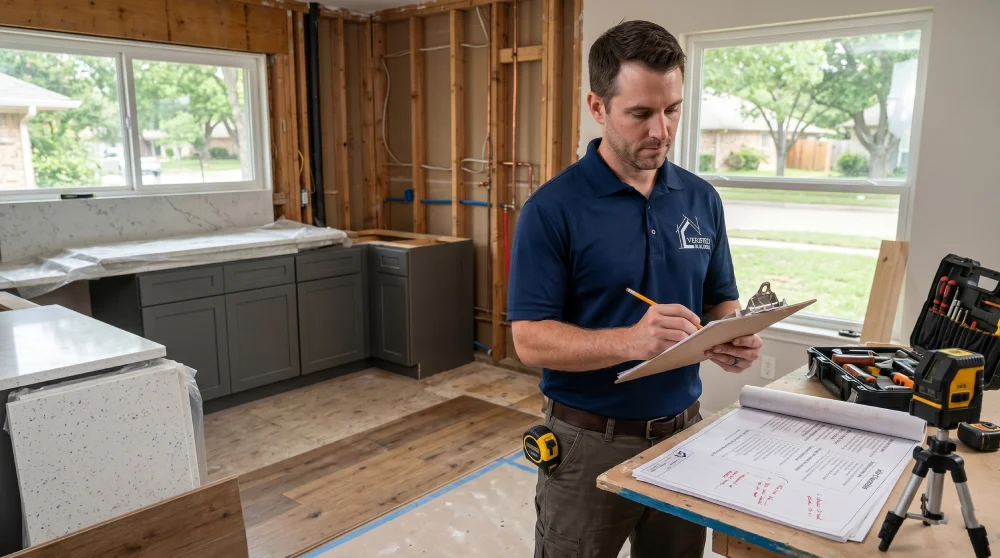
The right contractor can make the difference between a smooth kitchen remodel and a stressful one.
A qualified contractor should understand local codes, permit requirements, Denver remodel costs, older home challenges, layout planning, and material coordination.
Verified Builders provides kitchen remodeling services in Denver with planning, design, and construction guidance.
What to Look For
- Licensed and insured professionals
- Experience with Denver remodel projects
- Detailed estimates
- Clear scope of work
- Transparent timeline
- Strong communication
- Portfolio of completed kitchens
- Understanding of permits and inspections
- Design-build coordination
- Clear change order process
- Realistic budget guidance
Red Flags to Avoid
- Vague pricing
- No written scope
- Pressure to skip permits
- Unrealistically low bids
- No clear timeline
- Poor communication
- No proof of insurance
- No explanation of hidden costs
- No plan for inspections
- No detailed material allowances
A low estimate may look attractive at first, but if it excludes necessary permits, electrical work, plumbing, or finish details, the final price may end up much higher.
Frequently Asked Questions About Kitchen Remodel Costs in Denver
Ready to Plan Your Denver Kitchen Remodel?
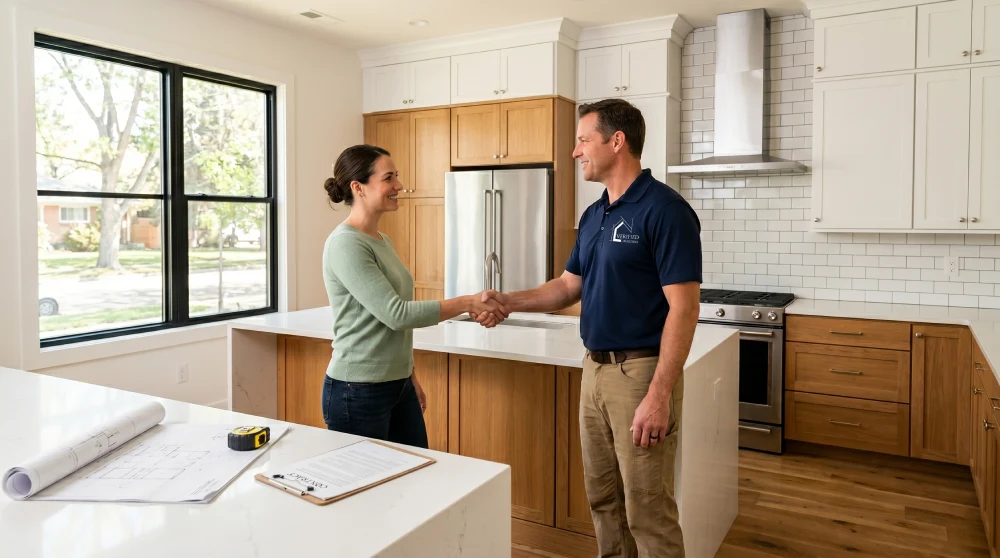
If you’re comparing kitchen renovation options, trying to understand the typical kitchen remodel cost, or worried about additional fees that may appear once construction begins, Verified Builders can help you plan with clarity before the first cabinet is removed.
Our interior designer team helps Denver homeowners evaluate layout, cabinetry, countertops, appliances, flooring, lighting, permits, and budget priorities so every decision supports the final vision.
Contact Verified Builders today to start planning a kitchen remodel that feels beautiful, functions better, and protects your investment from the beginning.